Nuclear Density Gauge Testing (ASTM D6938-23): Direct Transmission vs Backscatter and Trench Wall Scatter
Compare direct transmission and backscatter, then work through nuclear density gauge seating, moisture and trench-wall checks.
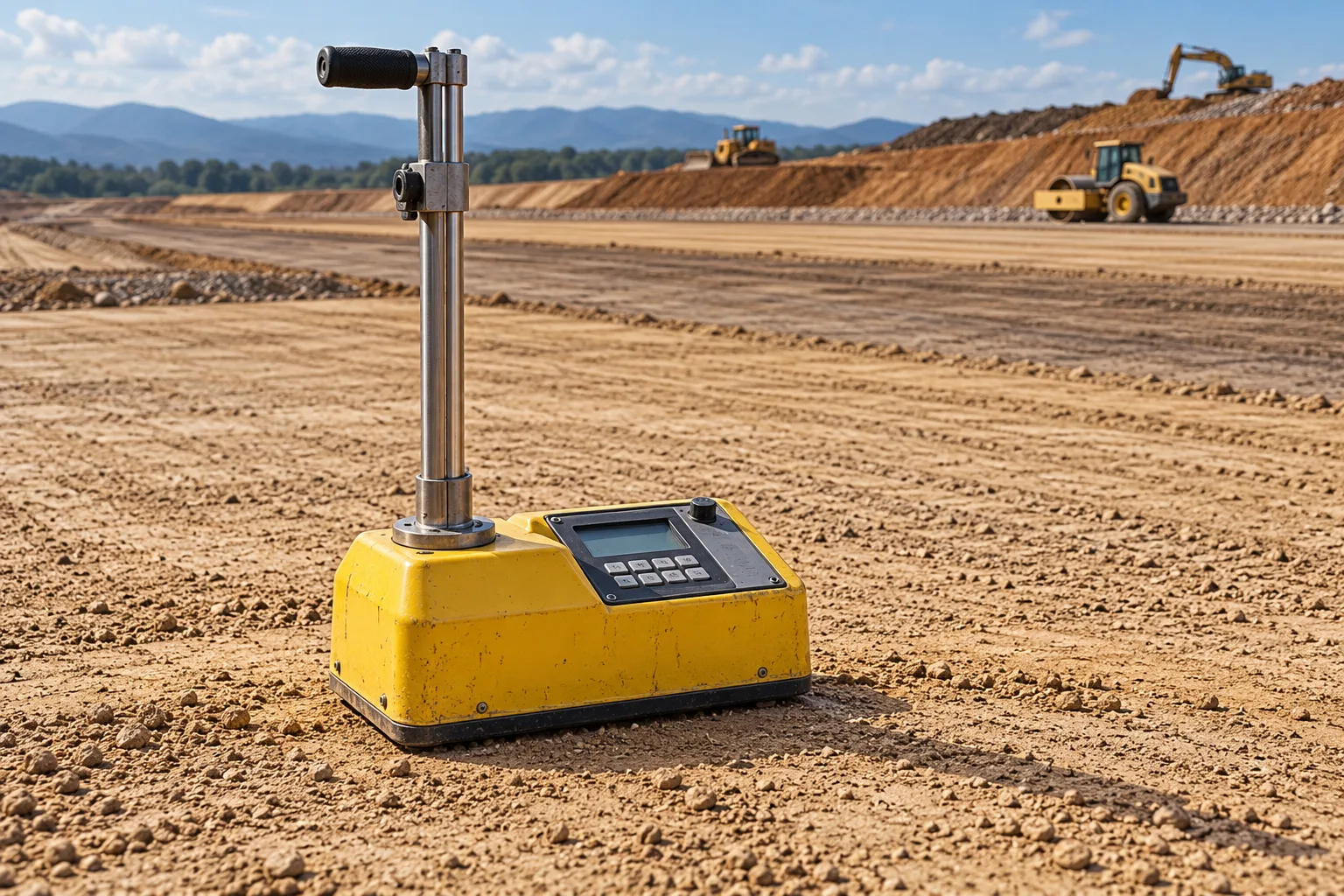
Direct transmission is the preferred density method in ASTM D6938-23.
Water-content measurements are taken at the surface in backscatter mode regardless of density mode.
For a nuclear density gauge check, work through the density mode, the moisture channel and the trench setup separately. Use the comparison and field checklist below, then return to the broader sitework, earthmoving and drainage guide for related planning.
Direct transmission vs backscatter
| Check | Direct transmission | Backscatter |
|---|---|---|
| Source position | In direct transmission the source is placed at a known depth up to 300 mm (12 in.), with detector(s) at the surface; some gauges may reverse this orientation. | In backscatter or backscatter/air-gap the source and detector(s) remain on the surface. |
| Access hole | The direct-transmission probe extends through the gauge base into a pre-formed hole to the desired depth. | Backscatter eliminates the need for an access hole by keeping the source and detector on the surface. |
Backscatter density measurement is less accurate than direct transmission because of the large scattering angle and shallow measurement depth.
Density weighting: Troxler Model 3430
Direct transmission measures average material density from the source to the surface. Backscatter yields an average heavily weighted toward density near the surface.
In the manual’s top-layer example, the density of the top inch of a surface layer accounts for about 52% of the backscatter density measurement.
Keep the mode and selected probe depth together in the test record.
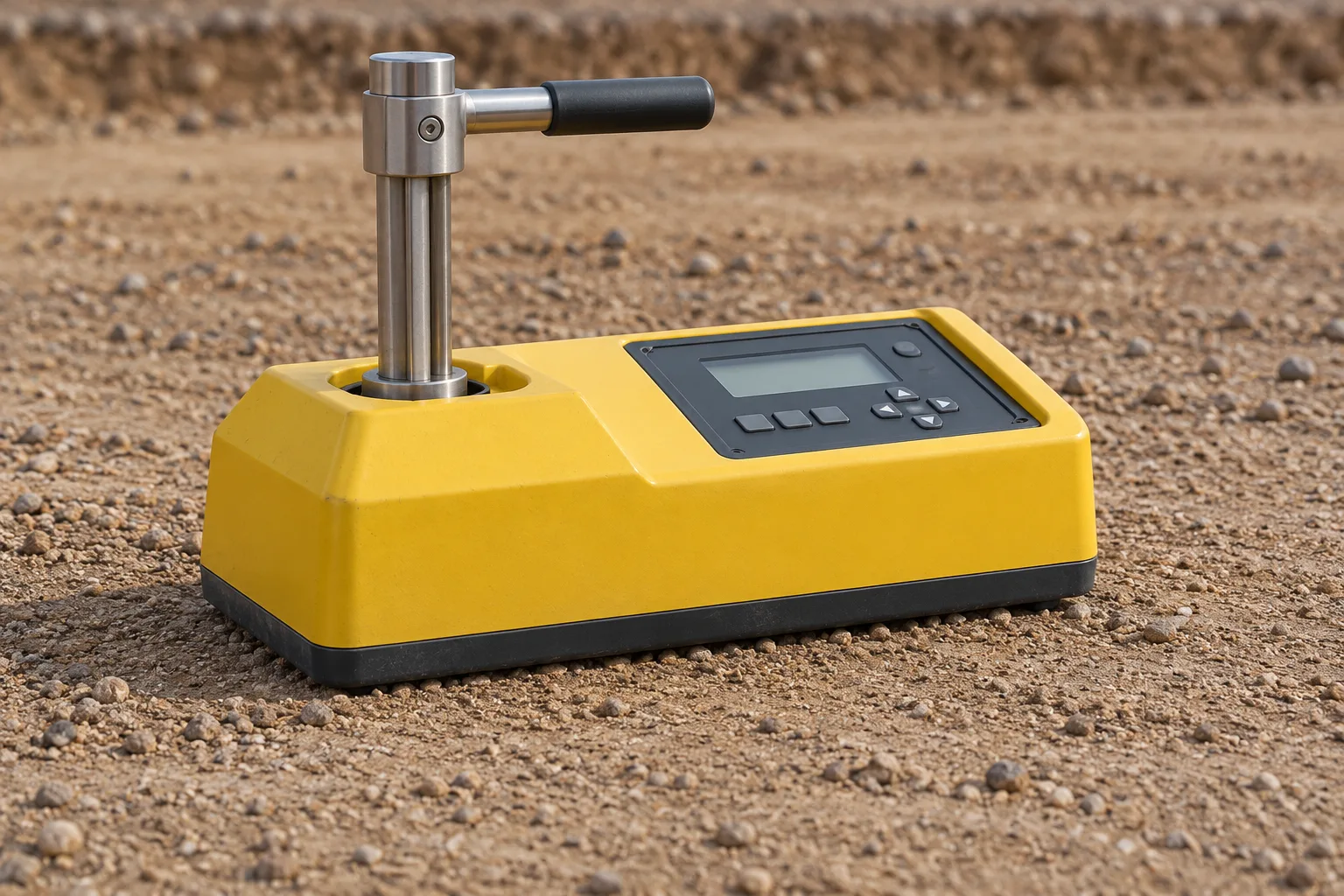
Check the test surface and probe hole
Use the following checks under the WSDOT Materials Manual’s WAQTC field operating procedure:
- Standardize the nuclear gauge at the construction site at the start of each day’s work and as often as deemed necessary by the operator or agency.
- The depth of the surface-void filler should not exceed approximately 3 mm (1/8 in.).
- The hole shall be at least 50 mm (2 in.) deeper than the desired source rod depth.
- Ensure the gauge is seated flush against the surface by pressing down on the gauge corners and making sure that the gauge does not rock.
- Gently pull the gauge so the source-rod side nearest the detector contacts the hole side.
What the moisture channel measures
Density is calculated by comparing detected gamma-radiation rate with established calibration data. Water mass per unit volume is determined by slowing fast neutrons by hydrogen.
The neutron source and thermal-neutron detector are both at the material surface. Dry density is obtained by subtracting water mass per unit volume from wet density.
For Troxler Model 3430:
Some soils contain hydrogen sources other than water or may contain neutron absorbers. The moisture offset factor is determined by comparing laboratory-sample moisture with gauge moisture.
Keep a laboratory moisture comparison and the gauge moisture reading together when reviewing the moisture offset.
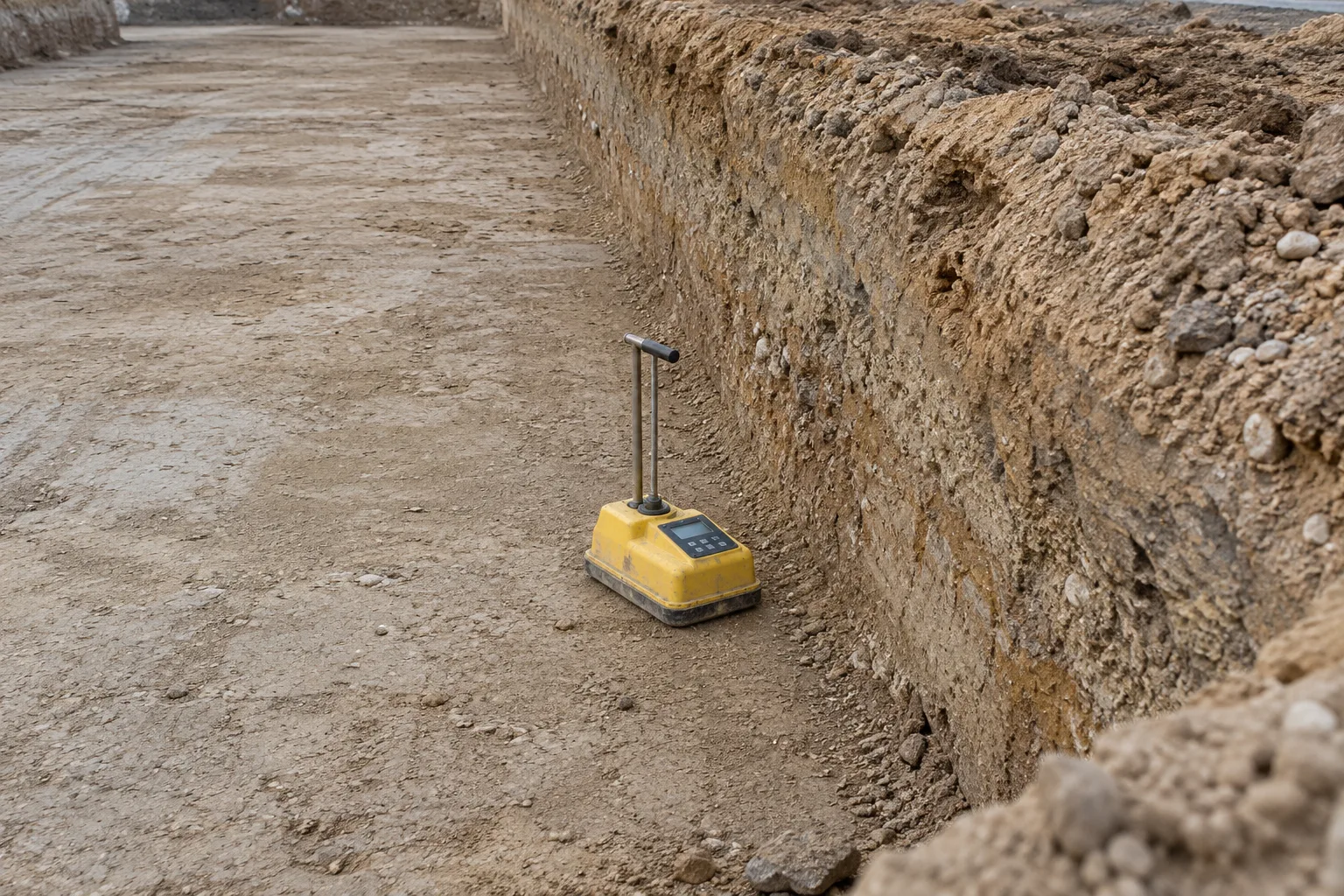
Trench compaction moisture error: check the wall effect
Wall moisture can thermalize neutrons that return to the gauge and are read as moisture. Without the necessary trench offset the gauge may read falsely high moisture content.
Under the WSDOT Materials Manual’s WAQTC field operating procedure:
- The test site should be at least 150 mm (6 in.) away from any vertical projection.
- Correct for trench wall effect according to manufacturer’s correction procedures if the test site is closer than 600 mm (24 in.) to vertical projection.
Trench-offset example: Troxler Model 3430
A trench offset may be required in a trench or within 2 ft. (0.6 m) of a large vertical structure. If used, the trench offset adjusts all moisture measurements but only the density measurements from backscatter through 4 in. (10 cm).
Use these setup checks from the model’s trench-offset procedure:
- Take and record the daily density and moisture standard counts outside the trench.
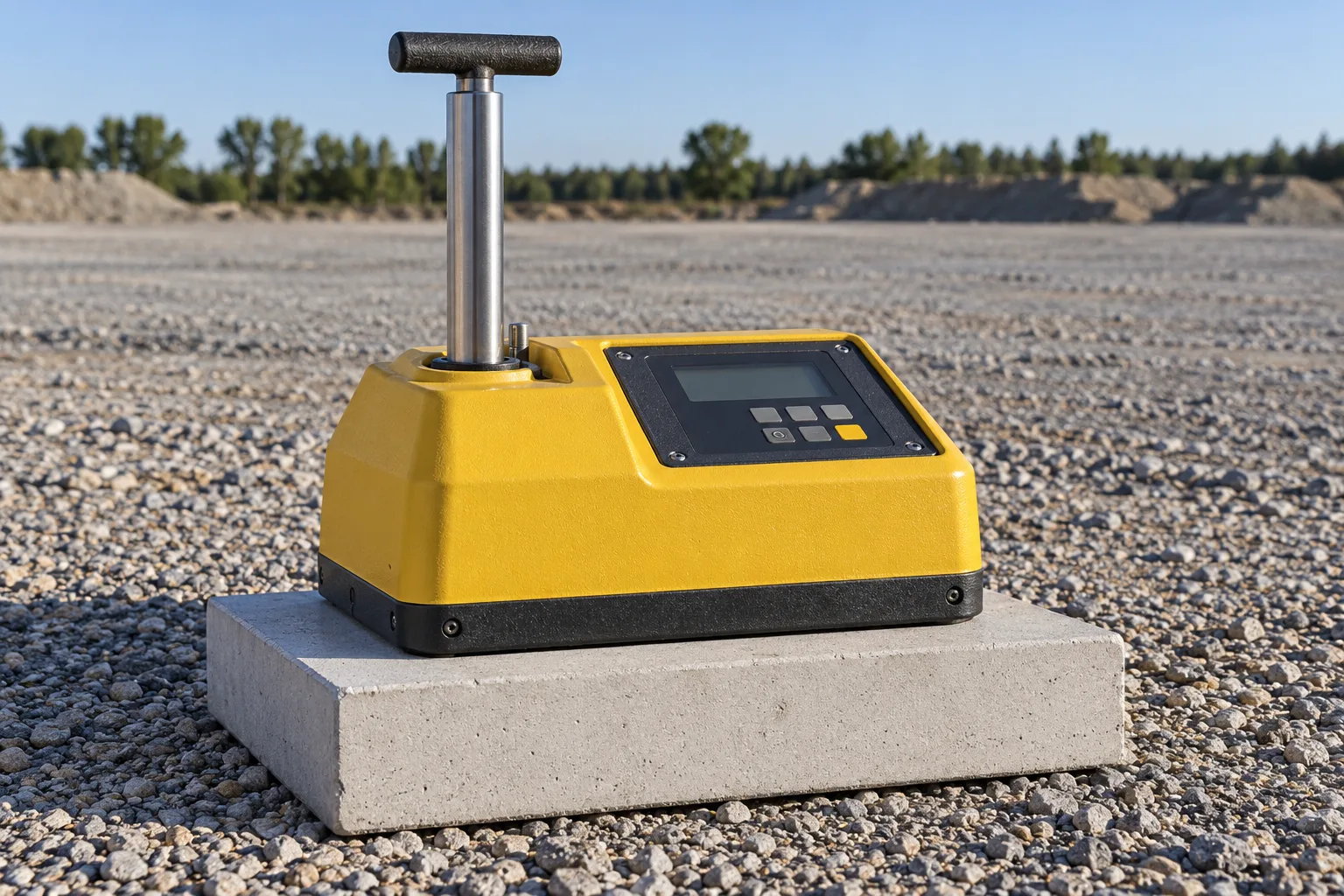
- Place the gauge on the reference standard block in the trench the same distance from the wall as the anticipated readings. Do not take another standard count.
- Set the trench-offset count time to four minutes.
- With the source rod in the SAFE standard-count position, take a four-minute count.
Before the next test location
For Troxler Model 3430:
An enabled offset automatically adjusts all future readings regardless of test site. Disable the offset before reading materials that do not require it.
Keep the enabled-offset status visible in the test record before moving on.
Field record to complete
Use this worksheet alongside the test record:
| Record | Entry to complete |
|---|---|
| Equipment and location | Gauge model; test location; material and lift identification |
| Density setup | Selected mode; source-rod depth; surface seating check |
| Standardization | Daily density and moisture standard counts |
| Trench setup | Distance to wall; applicable procedure; trench-offset status |
| Moisture review | Gauge reading; laboratory comparison; moisture-offset status |
| Handoff | Wet density; moisture; dry density; reference report; next-location offset check |
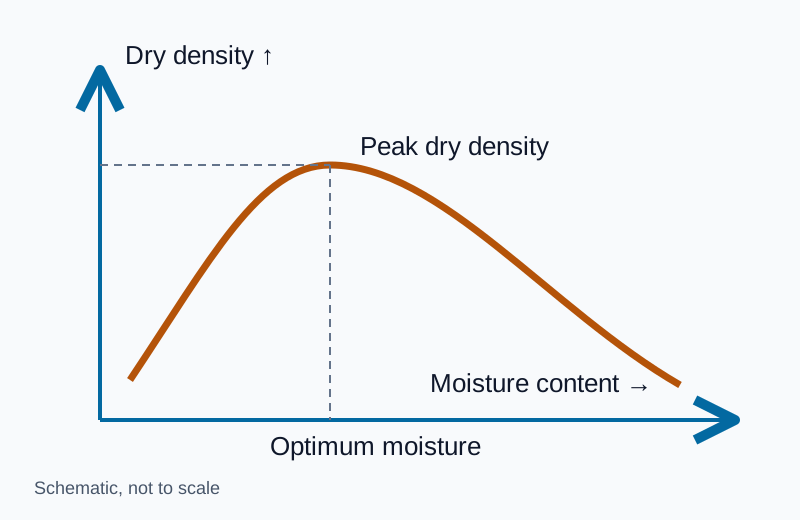
Continue with Proctor reference density and optimum moisture when reviewing the laboratory reference.
Questions from the test location
Does direct transmission move the moisture measurement down the probe?
Water-content measurements are taken at the surface in backscatter mode regardless of density mode.
What should I check when trench moisture reads high?
Without the necessary trench offset the gauge may read falsely high moisture content. Wall moisture can thermalize neutrons that return to the gauge and are read as moisture.
Can an offset carry over to another location?
For Troxler Model 3430:
An enabled offset automatically adjusts all future readings regardless of test site. Disable the offset before reading materials that do not require it.
Sources
- ASTM International — ASTM D6938-23, public Scope and Significance
- Troxler — Model 3430 User Manual
- WSDOT Materials Manual — WAQTC field operating procedure
- Canadian Nuclear Safety Commission — How portable gauges work
Explore the related topic and technical references.