Building Restoration
Guides to evaluating existing buildings, documenting damage, and planning durable restoration work.
Building restoration begins by understanding an existing condition before choosing a treatment. Visible staining, odor, surface loss or cracking can prompt investigation, but the visible symptom alone does not establish the cause, the affected extent or whether an assembly is safe to retain.
Use this section to organize questions, documentation and specialist involvement. Entry, structural repairs and occupancy require the appropriate authorization and qualified assessment.
Find the guide that matches the condition
| Starting concern | Read first | Decision the guide helps frame |
|---|---|---|
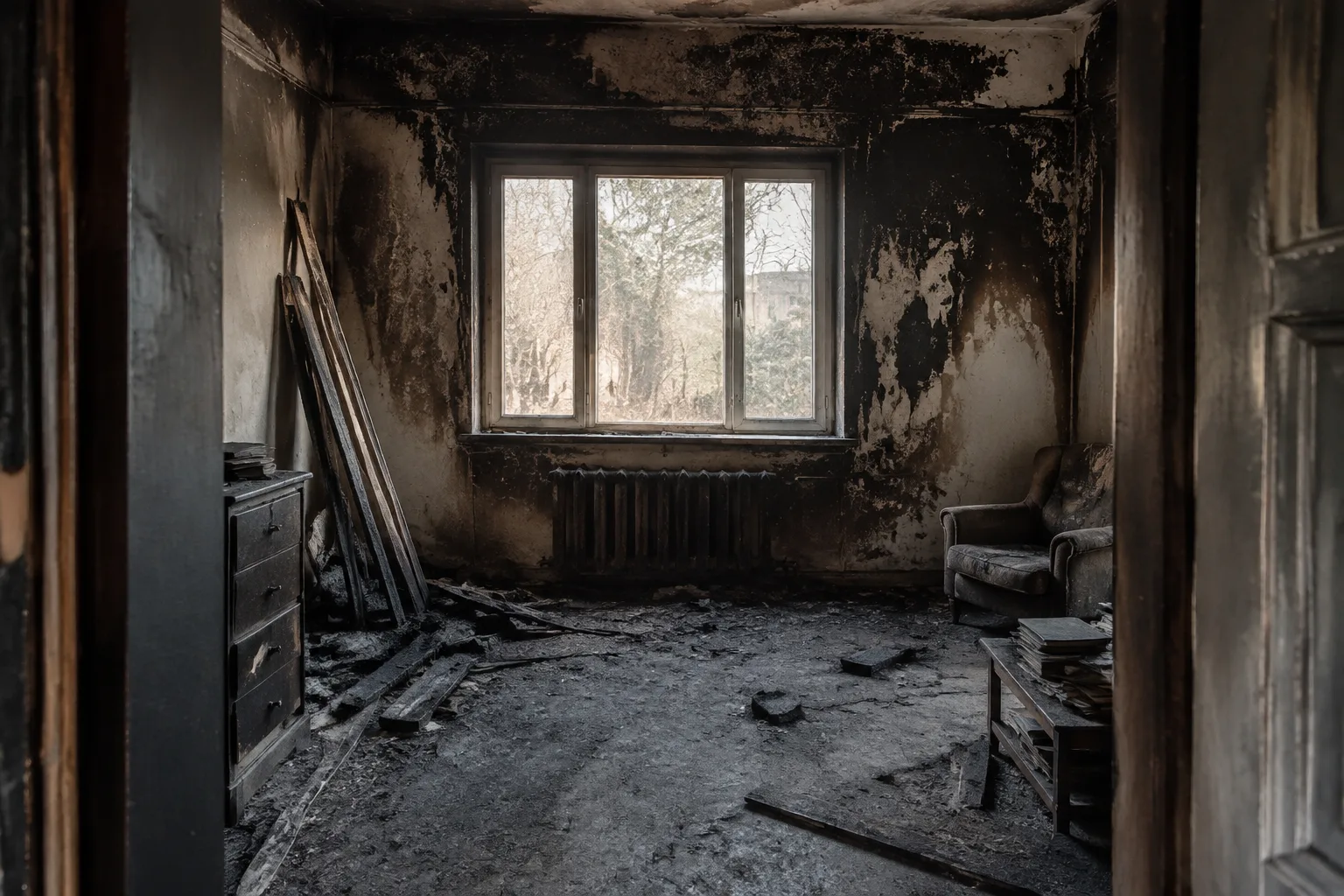
| A building has experienced a fire | Fire damage restoration | How to separate assessment, recovery planning and release |
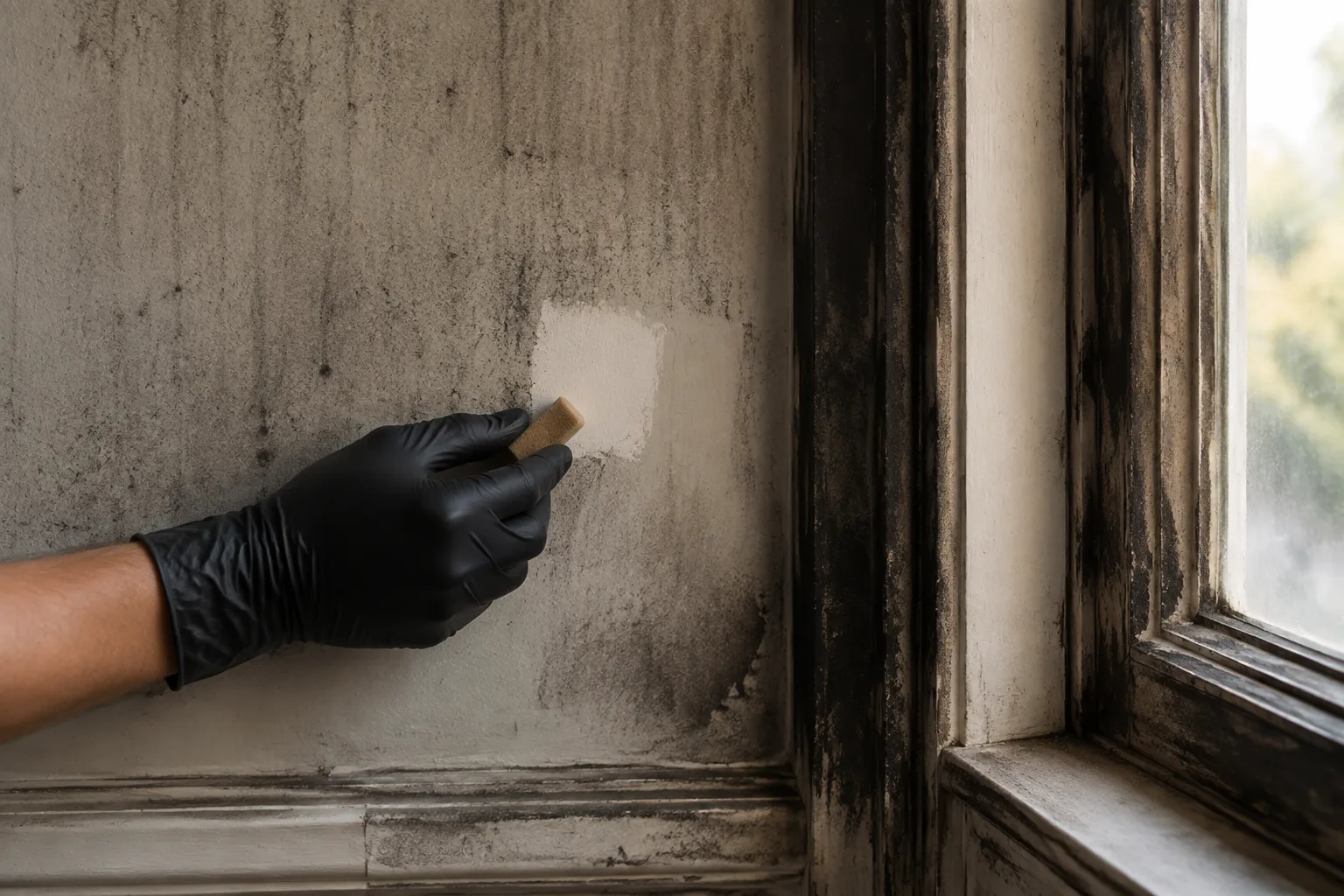
| Deposits or odors remain after smoke exposure | Smoke and soot cleaning | How to compare treatment proposals and trial evidence |
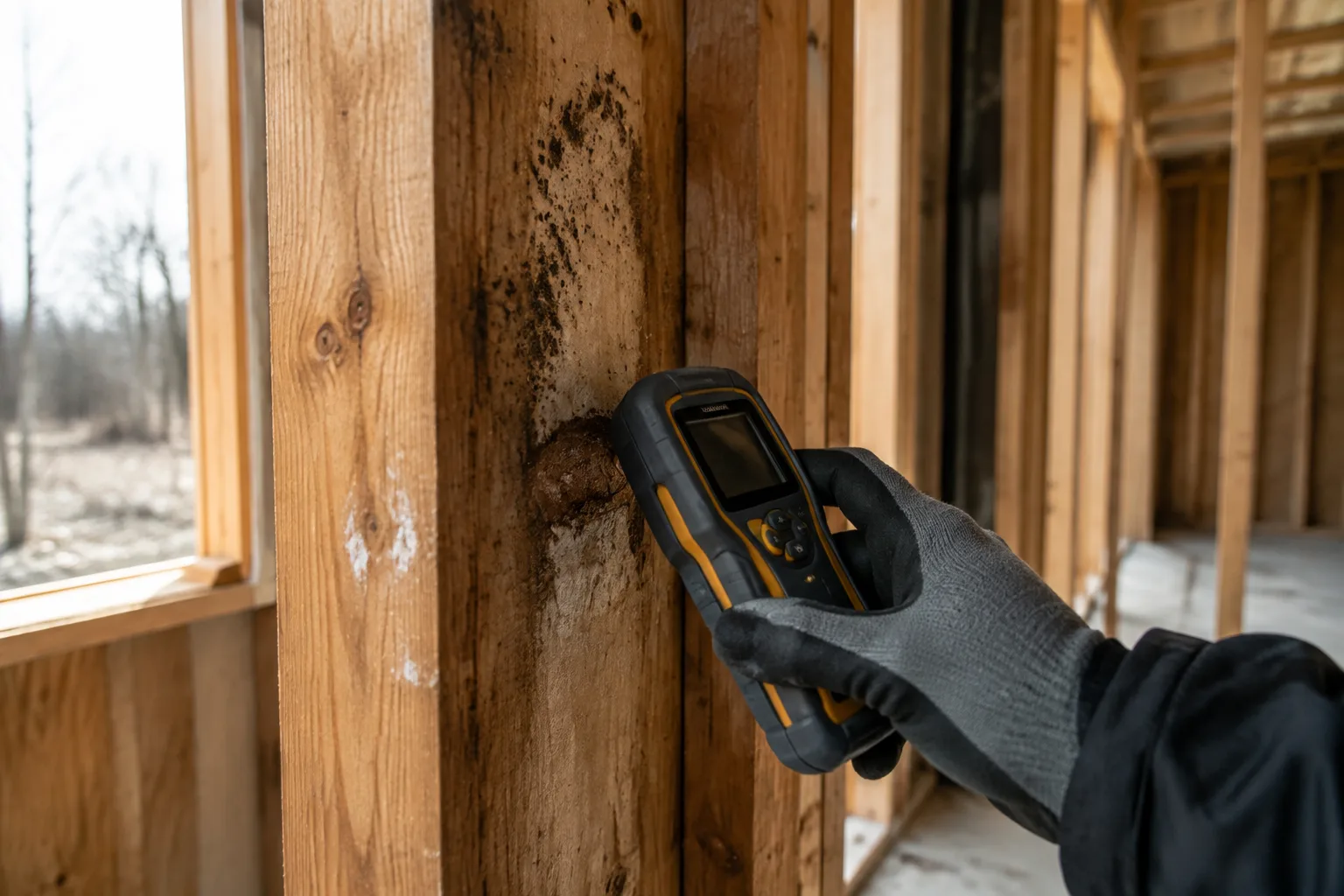
| Wood shows possible mold growth | Mold on wood | How moisture, material condition and remediation scope differ |
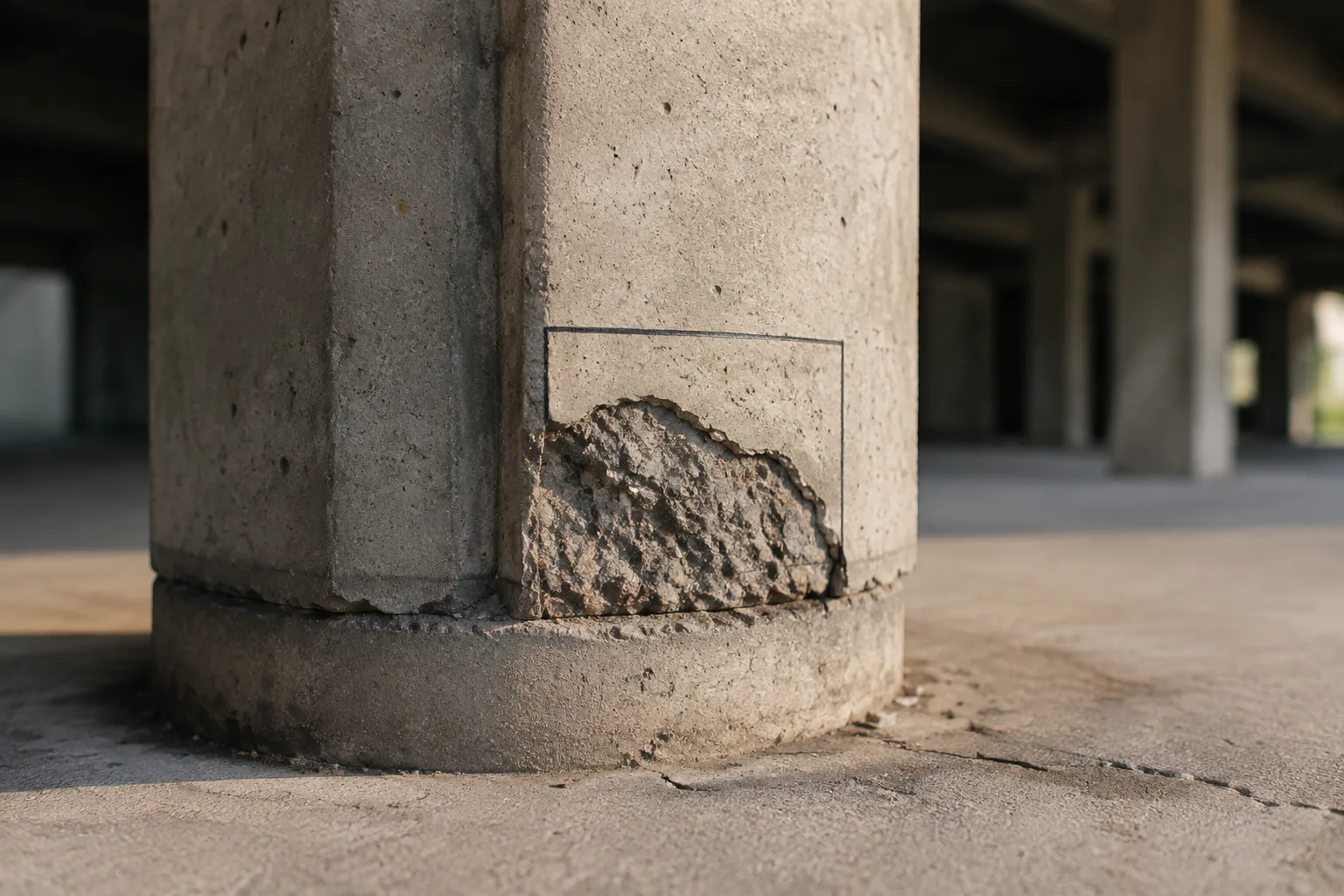
| Concrete is deteriorated or damaged | Concrete restoration | What investigation and repair-system information is needed |
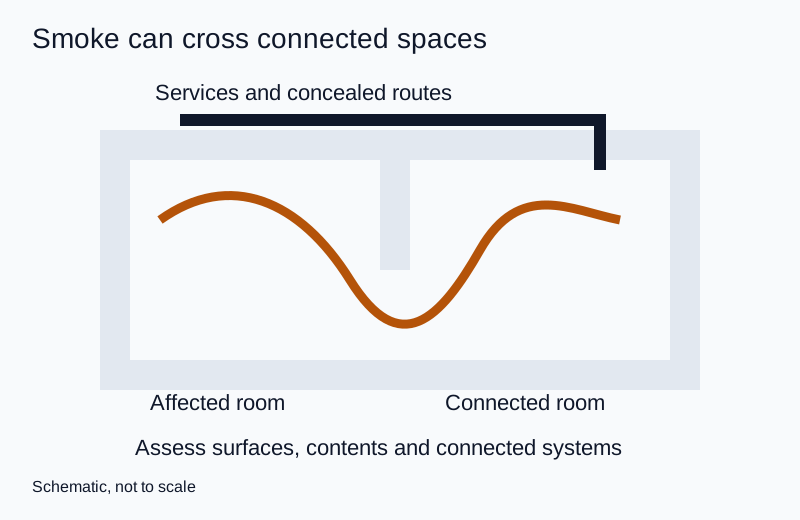
These paths may overlap. A fire recovery project may also involve water exposure, smoke residues and damaged structural components. Use the relevant guides together without assuming that one specialist’s approval covers every condition.
Distinguish observations from conclusions
Create a condition record that describes location, date and what can actually be observed. Identify inaccessible areas and note whether a statement comes from a photograph, a document or an on-site assessment. Avoid translating a visual description into a diagnosis without evidence.
For example, “dark staining beside a timber connection” is an observation. “The member is structurally sound” is a different kind of conclusion requiring an appropriate basis. Similarly, removing visible residue does not prove that every affected cavity has been investigated.
An illustrative scope meeting might produce three lists: confirmed work, work dependent on further assessment and excluded areas. Keeping those lists separate helps readers of the proposal understand what its price and completion statement actually cover.
Resolve the continuing source of damage
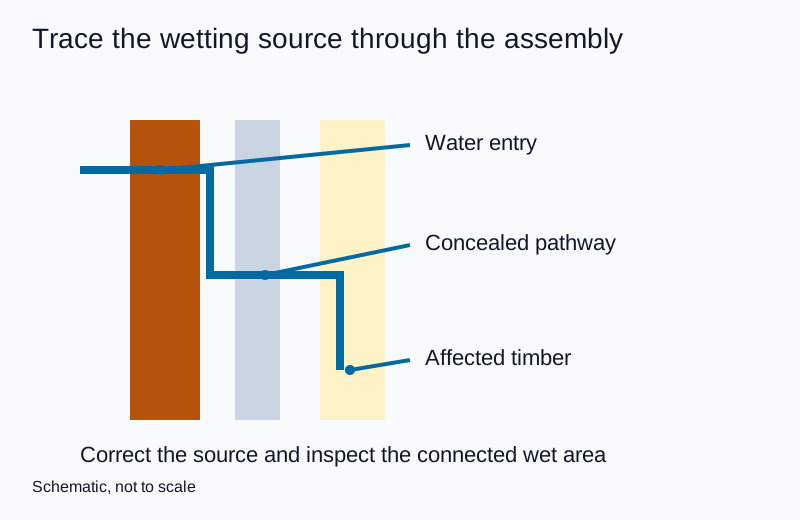
A restoration proposal should address why the condition developed or persisted, not only how the visible surface will look afterward. For moisture-related concerns, ask what is known about the water pathway, how it will be corrected and what evidence supports closure.
The EPA’s brief guide to mold and moisture emphasizes moisture control as part of preventing recurring mold problems. Apply moisture prevention alongside the material assessment and repair design for the affected building.
Keep separate questions separate: whether growth has been addressed, whether the moisture source is controlled and whether damaged material can perform its intended role. One answer should not silently substitute for another.
Compare scopes before comparing prices
Ask each proposed contractor or consultant to identify the investigated area, assumed material conditions, access limitations, treatment boundaries and acceptance criteria. Include protection of adjacent work, waste handling responsibilities and the route for approving unexpected conditions.
Two quotations may use the same method name while covering very different work. One may include investigation and verification; another may assume both are supplied by someone else. A useful comparison shows these differences rather than reducing everything to a unit rate.
If a method depends on a successful trial, state what the trial is expected to demonstrate. Appearance, surface condition and compatibility with subsequent work are different outcomes. The surface preparation hub provides a method-selection framework for this stage.
Plan verification before treatment begins
Agree on what will be checked, where the evidence will be recorded and who can accept it. A completion photograph is useful for some purposes, but it cannot establish hidden conditions or replace a required test.
Identify hold points before work conceals an interface or removes evidence needed for assessment. If the project requires professional inspection, coordinate access and notice periods before production begins. Explain how an unsuccessful check changes the next step.
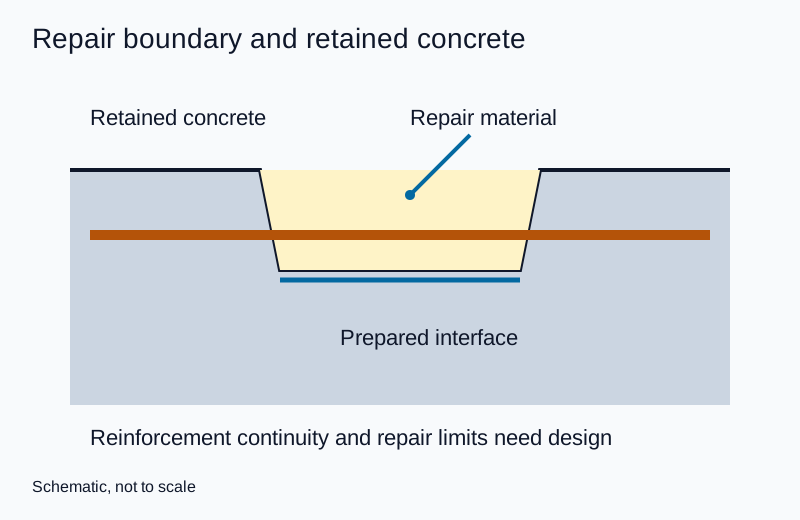
The concrete restoration guide discusses this relationship between repair planning and acceptance. The material systems guide explains why repaired areas must also work with adjoining components.
Keep a usable owner handover
A handover should identify treated locations, retained limitations, relevant products, inspection records and maintenance information. If areas remain inaccessible or outside the contracted scope, make that visible rather than allowing “project complete” to imply an unrestricted conclusion.
The owner should be able to distinguish a contractor’s treatment record from an engineering assessment, laboratory report or occupancy authorization. These documents have different purposes and may come from different parties. Keep their authorship and scope intact.
Who releases a building for access and use?
The responsible authorities and appropriately qualified professionals establish entry, structural, electrical, environmental and occupancy decisions. Confirm the permitted activity and any restrictions before entering or restarting use.
Does restoration always mean retaining the original material?
No. Retention, repair and replacement depend on condition, intended performance, constraints and appropriate assessment. Historical or significant materials may also need conservation input before treatment.