Surface Preparation Methods: Cleaning, Removal and Profile Compared
Compare surface preparation methods by substrate, coating removal, profile, waste and acceptance tests. Includes a practical trial and contractor checklist.
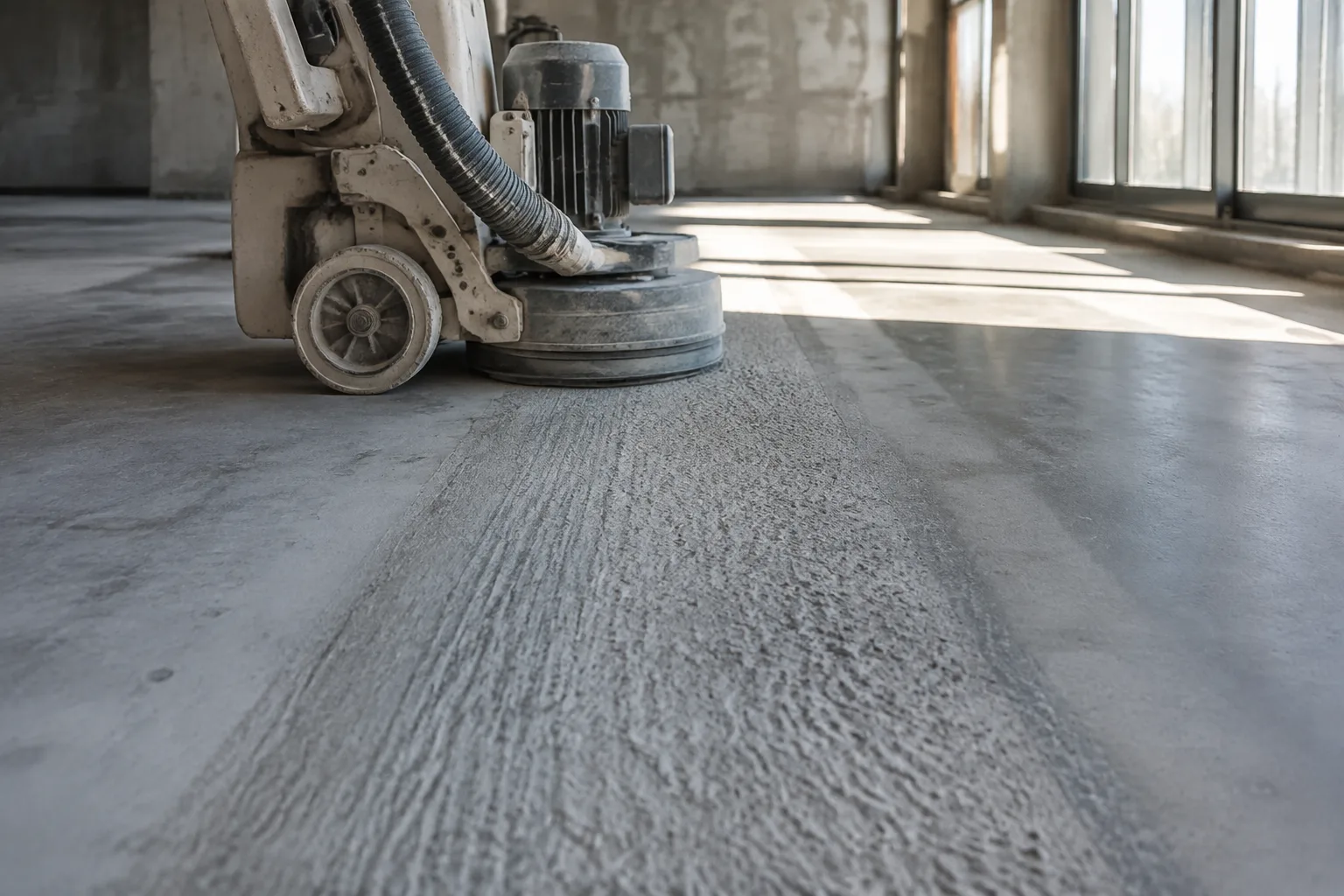
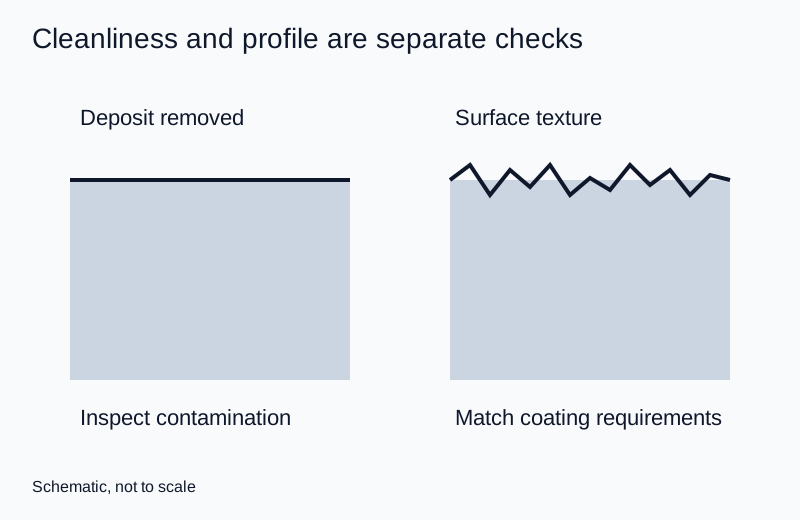
Surface preparation methods do different jobs: they clean contamination, remove unwanted material, or change the texture of a substrate so that the next system can bond. Those jobs can overlap, but they are not interchangeable. A floor can look clean while retaining an unsuitable coating. A blasted surface can have a rough texture while still needing contamination checks.
The useful starting question is therefore not “Which machine is fastest?” It is “What condition must this particular surface reach before the next trade can accept it?” This guide helps owners, estimators and project teams compare options, write a representative trial, and avoid paying for removal that does not deliver a usable substrate. Use qualified project personnel to establish the engineering and safety requirements for the work.
Quick answer: which method should you choose?
Choose the least destructive method that can demonstrate the specified result on the actual substrate, within the site’s exposure, access and waste constraints. Define the required cleanliness, removal depth, surface profile and moisture condition separately. Then compare candidate methods in a controlled test area, including cleanup and inspection.
There is no universally best method. A combination may be appropriate: decontamination before mechanical preparation, a main machine for open areas, and a different treatment at edges. Acceptance should apply to the finished area, not merely to the fact that a named tool was used.
Three outcomes that should not be confused
Cleaning addresses material on the surface, such as a removable deposit. The intention may be to preserve the existing finish. Success needs a definition: visually acceptable, suitable for a maintenance task, or compliant with a specified contamination limit are different endpoints.
Removal takes away an unwanted coating or deteriorated substrate. The specification should identify what must remain and what must go. “Remove loose material” leaves a different surface from “remove the entire coating system.” Neither phrase establishes that the underlying material is sound.
Profiling establishes a texture suitable for the proposed coating, lining or repair material. It is not simply making a surface as rough as possible. Excessive texture can create another finishing problem, while insufficient texture may fail the system’s preparation requirement.
For concrete, the ICRI technical-publication library provides access to surface-preparation guidance and concrete surface profile resources. A profile reference is one part of a specification, not a complete cleanliness or structural assessment. Obtain the applicable guideline and product instructions to establish the required profile.
Compare the main method families
Shortlist methods by the required outcome. Equipment configuration, consumables, operator technique and substrate condition determine the trial result.
| Method family | Question it may help answer | Main issue to prove in a trial |
|---|---|---|
| Detergent or compatible chemical cleaning | Can the deposit be removed while retaining the finish? | Residue removal, material compatibility and recovery |
| Hand scraping and power-tool preparation | Can localized unwanted material be removed with controlled access? | Completeness, edge transitions and substrate damage |
| Grinding | Can a floor or localized area reach the specified finish or profile? | Actual texture, remaining contamination and dust capture |
| Shot blasting | Can accessible floor areas receive repeatable mechanical preparation? | Uniformity, edges, transitions and recovery |
| Abrasive blasting | Can removal and specified preparation be achieved on the exposed surface? | Media suitability, surface condition and containment |
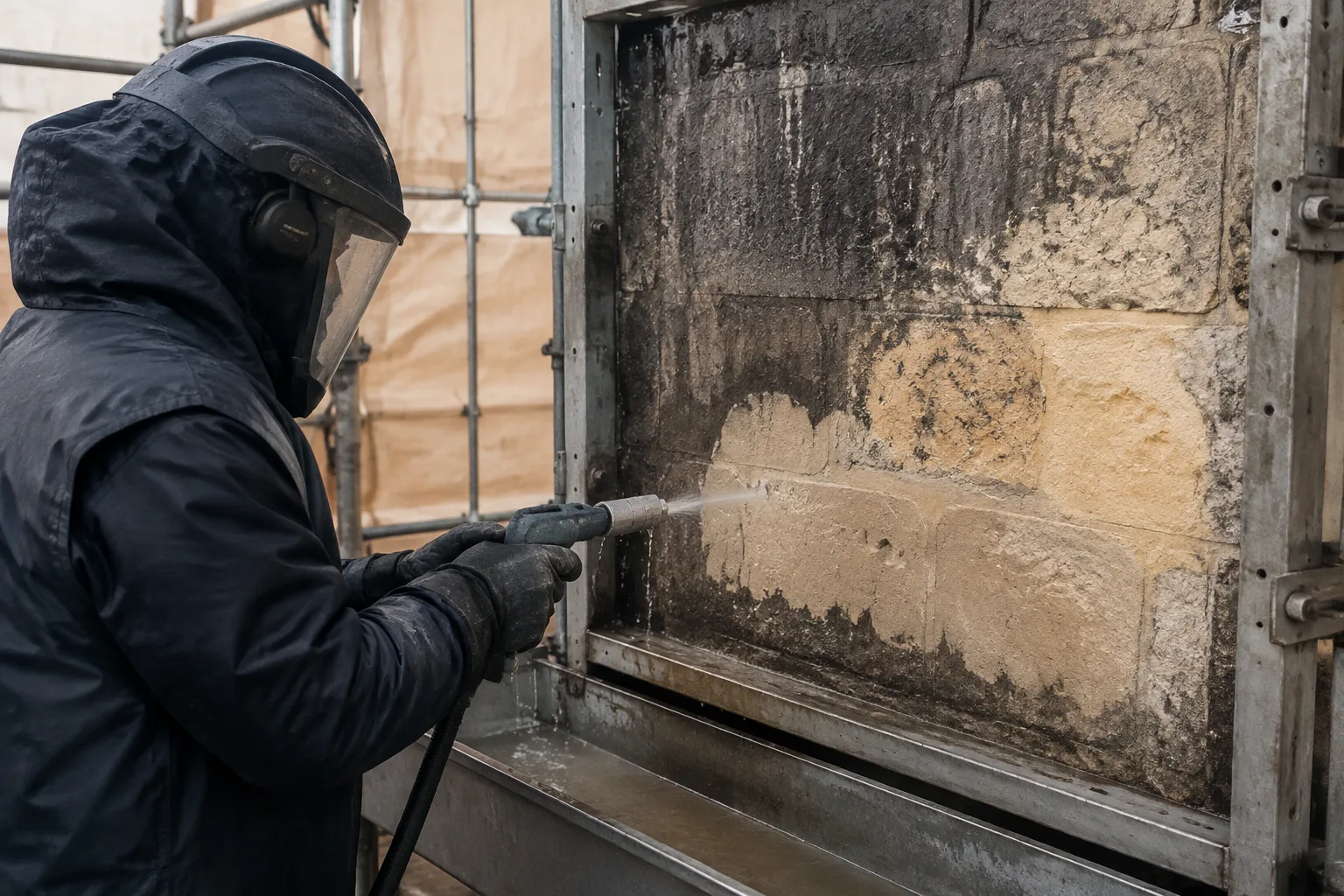
| Water-based cleaning or jetting | Can water-assisted removal meet the objective? | Substrate response, wastewater and readiness afterward |
| Dry ice or water-ice blasting | Can a deposit be detached without unacceptable change underneath? | Actual removal, remaining profile and waste or gas controls |
Chemical cleaning and stripping
Treat cleaning agents and coating strippers as separate selections. A cleaner that helps remove grease is not automatically capable of stripping a cured coating. Likewise, a stripper that softens a coating has not necessarily left a substrate ready for immediate recoating.
Request the selected product’s technical and safety information, the proposed recovery method, and the follow-up condition required by the new system. Include joints, porous areas and adjacent finishes in the trial. Do not improvise chemical mixtures or assume that a generic rinse instruction applies to every product.
A useful contractor question is: “How will you demonstrate that residues from this treatment are acceptable to the next material?” An answer limited to appearance does not resolve compatibility.
Hand tools, grinding and other mechanical preparation
Manual and powered tools may be part of localized work, edge preparation or an area inaccessible to larger equipment. Specify the result rather than accepting “power-tool cleaned” as a complete description. Different tools and attachments do not necessarily leave equivalent surfaces.
For floor work, ask for a trial that crosses a representative joint, an old repair and a perimeter if those features are present. An open center patch alone cannot demonstrate how the whole room will be delivered. Record the treatment needed where machine passes overlap or meet hand-prepared edges.
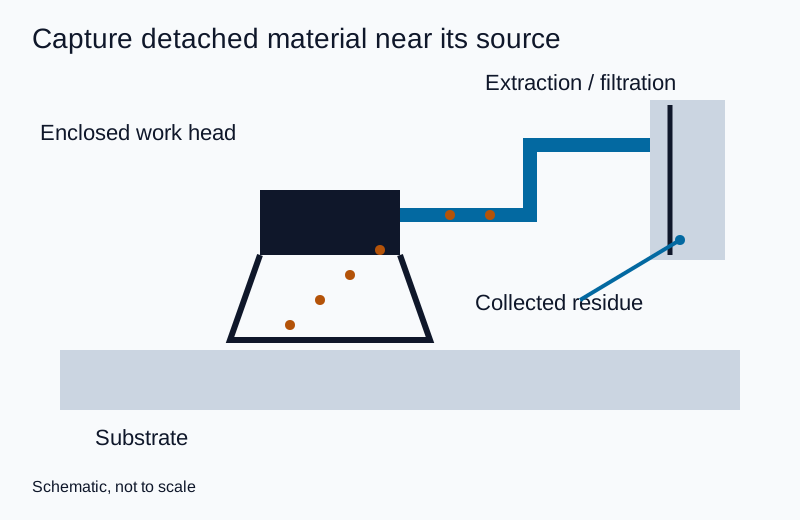
Mechanical preparation also needs a plan for generated dust. OSHA’s crystalline silica overview identifies activities including concrete grinding and abrasive blasting as potential sources of respirable crystalline silica. A competent project team must determine applicable exposure controls and respiratory protection. Visible dust alone is an unreliable measure of exposure.
Shot blasting and abrasive blasting
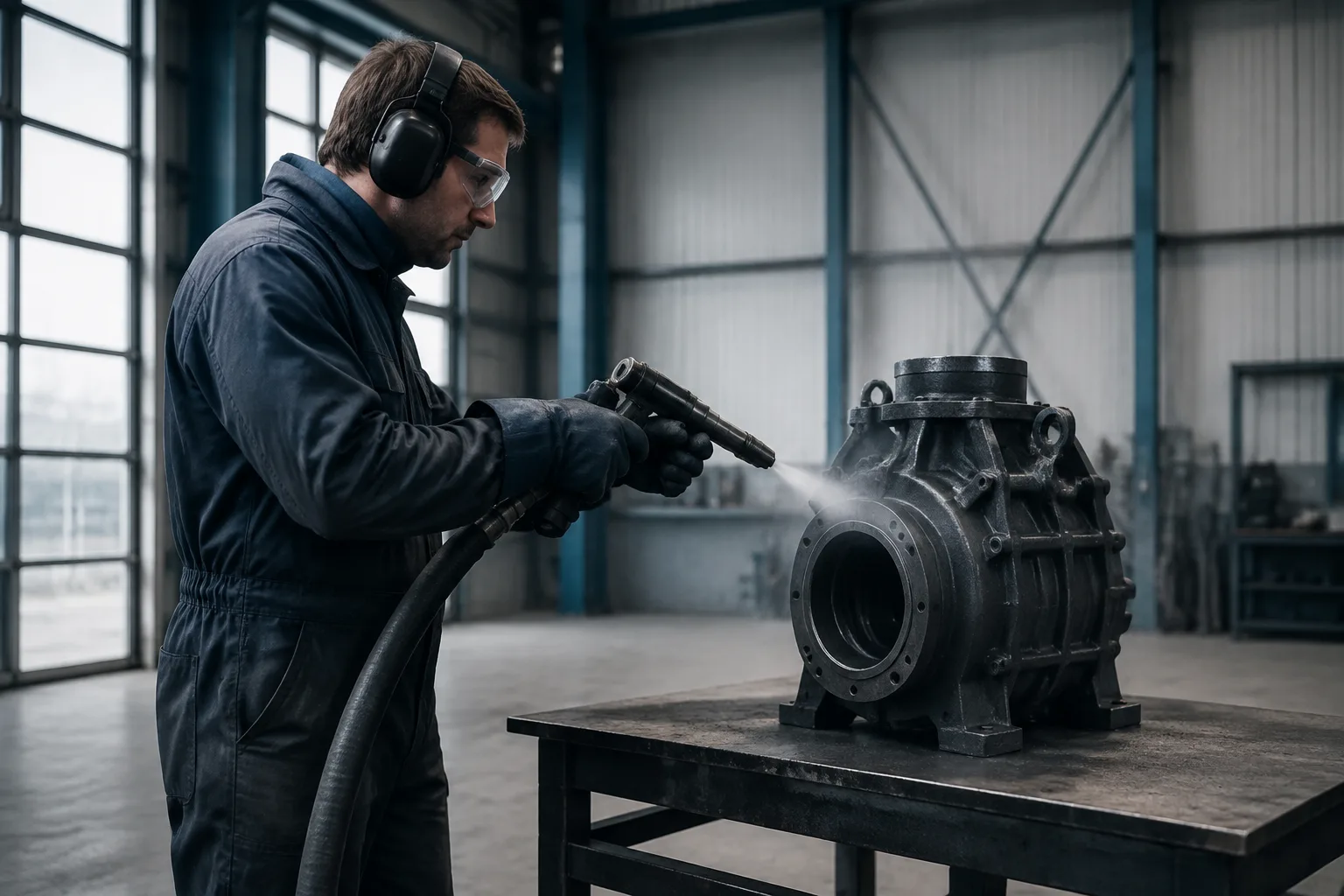
Do not treat every blasting system as the same process. Ask what media is used, whether it is recovered, what equipment can reach the work, and which surface condition will be inspected. A method name does not establish the cleanliness grade or texture delivered.
When comparing bids, include inaccessible corners, penetrations, overhead surfaces and adjoining finishes in the scope. A price for a large unobstructed floor is not directly comparable with a price covering all detailed preparation. Also establish who removes spent media and detached coatings.
The OSHA construction ventilation standard includes abrasive-blasting provisions. Its relevance depends on the work and jurisdiction; it should not be treated as an equipment approval or a universal procedure for every cleaning technology.
Water-based cleaning and jetting
“Water cleaning” can describe substantially different equipment and removal objectives. Ask the contractor to identify the proposed process and demonstrate its effect rather than selecting from a pressure number alone. The plan should explain collection, protection of openings, and the condition required before follow-on work.
For a coating project, water handling is not finished when the surface looks dry. The next product’s moisture requirements and specified test method still govern release. If the site cannot collect the generated wastewater or protect sensitive areas, resolve that constraint before scheduling a production trial.
Ice blasting
Dry ice blasting and wet ice blasting are distinct technologies, not alternate names for the same material. Their gas, water and recovery considerations differ. Review the process-specific guides before treating either as a substitute for abrasive preparation.
The key selection question is whether the method delivers the required substrate condition, not whether the cleaning medium disappears. Detached contamination still needs management. In particular, a demonstration that removes a deposit does not establish that the process creates a required profile for the next coating.
Start with the substrate and the next system
Concrete: separate soundness, contamination and profile
A concrete preparation scope should not reduce everything to a roughness label. Existing repairs, weak areas, contamination and moisture may require separate decisions. The Sherwin-Williams concrete preparation bulletin distinguishes inspection, removal of nondurable concrete, decontamination, profiling and repair of irregularities. It also connects method selection with the proposed system and location.
Use the current preparation instructions for the coating or repair product selected. For broader repair sequencing, see our concrete restoration guide.
Steel: make the acceptance language explicit
Ask the coating specifier to identify the required preparation standard, inspection method and environmental conditions for application. Do not import a concrete profile reference into a steel specification or substitute a photograph for a required measurement.
Define treatment around welds, edges, bolts and retained coatings. If a contractor proposes an alternative process, obtain acceptance of the resulting condition from the responsible party before treating the alternative as equivalent.
Wood, masonry and retained finishes: establish the preservation limit
When material is meant to remain visible, the trial must demonstrate what will be preserved as well as what will be removed. Choose a representative area approved by the owner; an inconspicuous location is not necessarily representative of every finish or deterioration pattern.
Agree how changes in texture, color, detail and exposed repairs will be assessed. Historic or fragile fabric may require specialist conservation input before any treatment. Do not use a successful test on concrete to justify the same treatment on timber or soft masonry.
Hazards can rule out an otherwise effective method
Determine whether suspect coatings or materials need assessment before disturbance. A high removal rate is not a benefit if the proposed method cannot meet the applicable containment and exposure requirements.
For covered U.S. renovation work, the EPA RRP work-practices guidance describes lead-safe containment, restrictions on certain practices, cleaning and verification. Its scope includes relevant pre-1978 housing and child-occupied facilities; it is not a blanket rule for every building worldwide. Have the responsible professional establish project applicability and any additional local requirements.
The work plan should also identify who controls access, protects adjacent operations and responds to a failed containment or recovery system. Those responsibilities belong in the site’s coordination plan, not only in a subcontractor’s equipment description. See the site-management hub for the broader planning context.
Design a trial that answers the purchasing decision
A trial should be small enough to control but representative enough to expose the main uncertainties. Agree on its boundaries before starting. If surfaces vary substantially, more than one test area may be needed.
Use the following sequence as a discussion framework:
- Write the target condition. Identify the retained material, removal requirement, specified profile, contamination checks and follow-on product requirements.
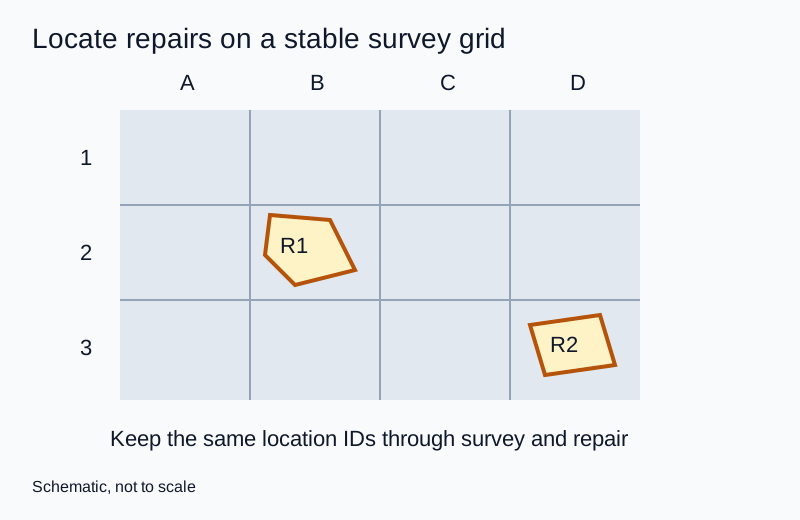
- Record the starting condition. Photograph and locate existing defects, coating variations and repairs. Explain why the area represents the work.
- Run the complete proposed process. Include access, protection, preparation, residue collection and cleanup, rather than timing tool contact alone.
- Inspect separate criteria. Record which observations or measurements support cleanliness, soundness, texture and moisture acceptance.
- Approve, revise or reject. Name the decision-maker and the condition that triggers a new trial if production conditions change.
Avoid converting one easy test patch into a guaranteed daily production rate. Record interruptions and detailed work separately. The trial should identify uncertainty, not hide it inside an impressive area-per-hour claim.
What should the handoff record contain?
The receiving trade needs evidence that relates to its requirements. “Blasting completed” is an activity report, not a complete acceptance statement.
| Handoff item | What to record |
|---|---|
| Area and scope | Location, boundaries, retained finishes and exclusions |
| Preparation process | Equipment family, consumables and agreed trial reference |
| Substrate condition | Observed defects, repairs and unresolved concerns |
| Required checks | Specified methods, results, locations and acceptance criteria |
| Waste and cleanup | Recovery completion and any remaining restrictions |
| Release decision | Inspector, date, acceptance status and conditions for follow-on work |
Not every project requires every possible test. The specification and responsible professionals should determine which checks are necessary and how results are interpreted. If the surface is later contaminated or exposed to changed conditions, earlier acceptance may need reassessment.
Compare the cost of an accepted area
Request pricing for a complete scope, including mobilization, protection, access, main preparation, detail work, recovery, disposal, inspection and expected return visits. State who pays if the trial reveals an excluded condition.
A useful comparison is total cost divided by the area accepted for the next operation, with assumptions clearly stated. A lower machine-hour price can lose its advantage when additional edge work or a separate cleaning stage remains outside the quote.
Ask each bidder the same three closing questions: What is excluded? What evidence releases the area? What changes would require a revised price? Comparable answers are more useful than choosing between unrelated productivity promises.
Frequently asked questions
Can cleaning replace surface preparation?
Cleaning can be one part of preparation. It is sufficient only when it delivers every condition required for the next use. If coating removal, repair or profiling is also required, a visibly clean surface alone does not complete the scope.
Is a rougher surface always better?
No. The target is compatibility with the specified system, not maximum roughness. Use the required profile and inspection method rather than an informal preference for a more aggressive finish.
Can two methods be used on the same project?
Yes, if the resulting surfaces satisfy the agreed requirements. Define how transitions and areas prepared by different methods will be checked. Do not assume equivalence merely because both areas look similar.
Should the contractor choose the method?
The contractor can propose a method based on access, equipment and experience. The project still needs a defined result and an identified acceptance authority. Agree on both before work, especially if the proposed method differs from the specification.
Explore the related topic and technical references.