Wet Ice Blasting: Process, Applications and Cost Drivers
How wet ice blasting works, how it differs from dry ice and wet abrasive blasting, and how to evaluate cleaning results, waste and project costs.
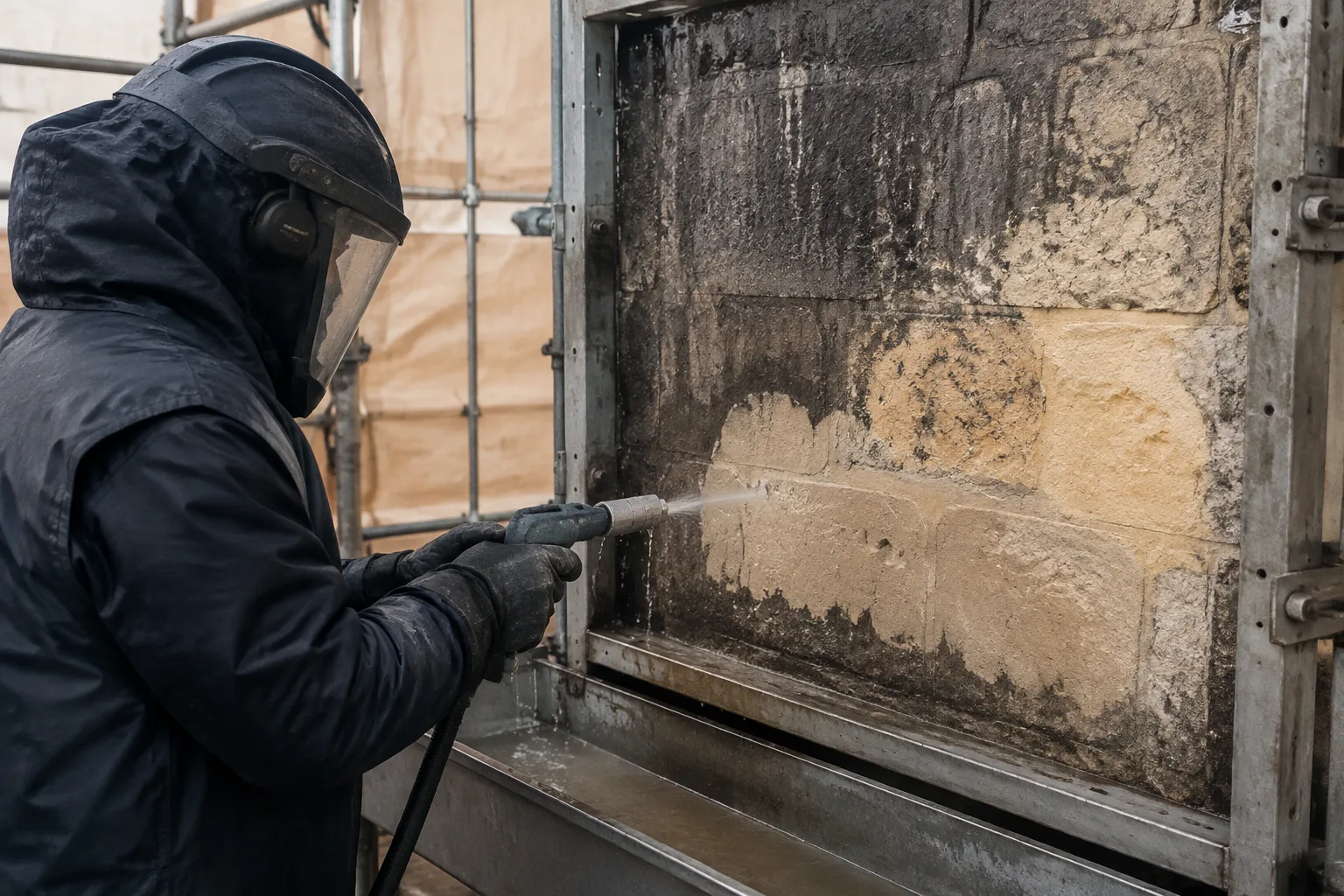
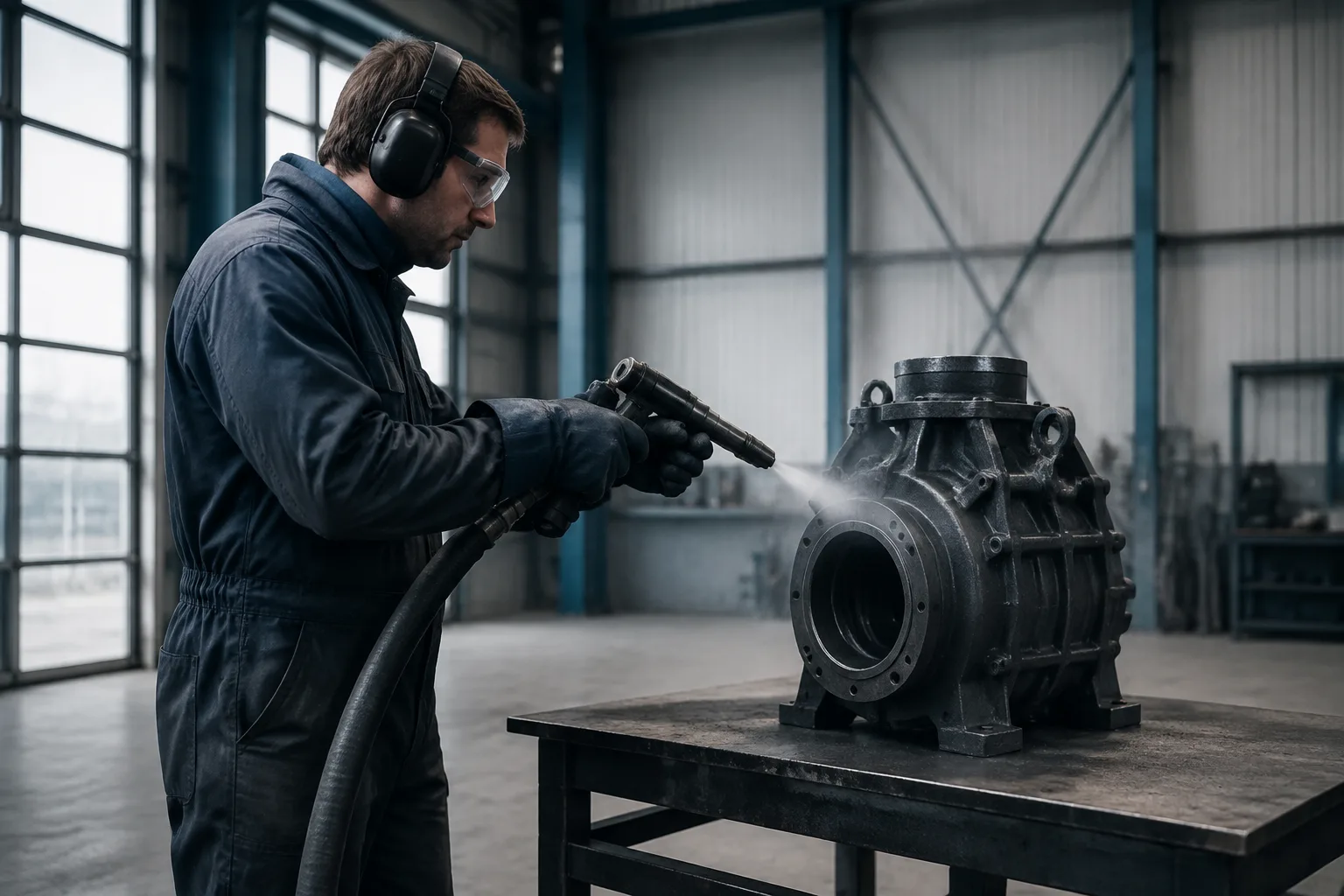
Wet ice blasting, also called water-ice blasting, uses frozen water particles carried toward a surface by compressed air to perform cleaning or selected removal work. It differs from dry ice blasting, which uses solid carbon dioxide, and from wet abrasive blasting, which introduces abrasive media into a wet process. The important practical distinction is what remains afterward: water ice can melt, but the material removed from the building still needs to be collected and managed.
For a contractor or facilities manager, the useful question is whether this method can deliver the specified surface condition within the site’s moisture, access and waste constraints. A demonstration of a clean patch does not answer all of those questions. This guide explains the distinctions, identifies situations worth testing, and provides a practical framework for comparing proposals and accepting completed work.
What does wet ice blasting mean?
Suppliers and search results sometimes use “ice blasting” for different technologies. Before comparing prices, ask the supplier to identify the actual medium: frozen water, solid carbon dioxide, or a separate abrasive mixed with water. Also ask whether the quoted configuration introduces additional liquid water or another medium.
An early ice-blasting patent, WO1997046838A1, describes generating ice particles and carrying them toward a nozzle with pressurized air or another gas. It supports the basic distinction between water ice as a working medium and liquid-water cleaning. For a proposed cleaning job, use the actual equipment manual and a representative surface trial to establish its operating configuration and material compatibility.
Commercial equipment has also used crushed water ice. Coulson Ice Blast’s 2017 product announcement describes equipment using crushed ice cubes. Use the documentation for the equipment proposed on your job and verify its cleaning result and recovery requirements in a trial.
How does the cleaning process work?
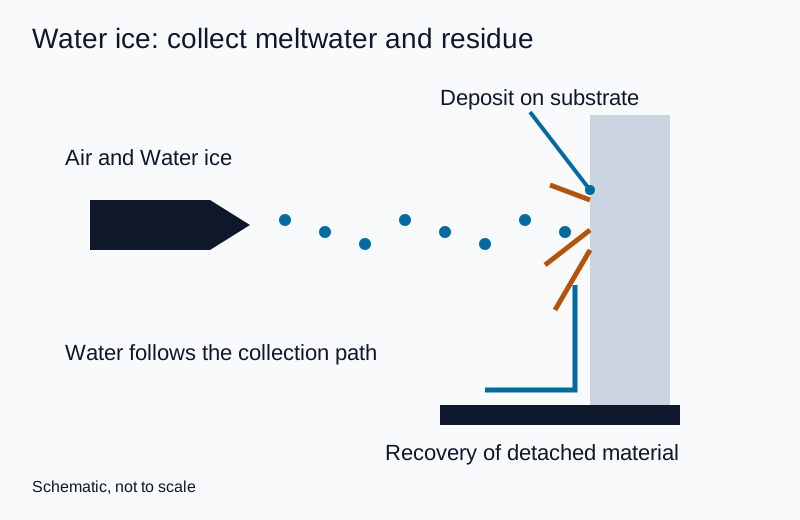
In the basic process, the equipment feeds water-ice particles into an air-driven delivery system. The nozzle directs them at the target surface. Their impact acts on the deposit or coating, while the ice can break down and melt. The removed material remains part of the cleanup stream even when the ice itself no longer exists as solid media.
Treat the nozzle, ice supply, air supply and recovery arrangement as one working system. A trial performed with different access or a different recovery arrangement may say little about production work. Record the actual equipment configuration so the accepted result can be reproduced rather than relying on an operator’s memory of a successful setting.
Do not infer a universal operating pressure, nozzle distance, particle size or cleaning rate from the method’s name. Those choices depend on the equipment and the surface being treated. The supplier’s operating instructions and the project team’s test results should establish usable settings.
Wet ice versus dry ice versus wet abrasive blasting
Compare the methods against the required surface condition. Compare specific systems on the same test surface and against the same acceptance criteria.
| Decision point | Water-ice blasting | Dry ice blasting | Wet abrasive blasting |
|---|---|---|---|
| Working medium | Frozen water particles | Solid carbon dioxide | Abrasive media in a wet process |
| Fate of the medium | Ice can melt to water | Dry ice changes directly to gas | Spent abrasive remains |
| Waste question | How will water and released material be recovered? | How will released material be captured? | How will abrasive, water and removed material be handled? |
| Site question | Can the assembly tolerate wetting and drying? | How will carbon dioxide and ventilation be addressed? | Can the work zone contain the wet abrasive stream? |
| Acceptance question | Does cleaning meet the required condition? | Does cleaning meet the required condition? | Does removal and any profiling meet the specified result? |
The carbon-dioxide distinction has a direct safety implication. CDC explains that dry ice is solid carbon dioxide and releases gas through sublimation. Water ice does not introduce that same medium-derived carbon-dioxide load. However, choosing water ice does not establish that a work zone has safe air: contaminants released from the surface and other site activities still need evaluation.
See our dry ice blasting guide and surface-preparation method comparison for the surrounding decisions. Compare methods against an agreed finish and complete work sequence, not just against the appearance of their spray streams.
Which applications are worth evaluating?
Start with a cleaning objective that can be measured. “Clean the building” is too broad to price or inspect. A better scope identifies the deposit, the material underneath it, the finish to preserve and the condition needed for the next operation. Evaluate the proposed treatment on the actual surface.
Accessible, moisture-tolerant surfaces
A surface with accessible deposits and a practical recovery route may be a candidate for a trial. Check surrounding joints, openings and materials as well as the visible face. A durable panel can sit above a water-sensitive cavity, and a cleanable metal component can be connected to equipment that must remain isolated from moisture.
Ask whether water could migrate behind the work, collect at a low point, or affect operations on the other side of an enclosure. If the work needs extensive dismantling simply to protect hidden areas, include that in the comparison with alternative methods. The ease of cleaning the exposed face is only one part of the job.
Selected coating or deposit removal
Distinguish removing an unwanted layer from preserving the layer below it. A proposal should state whether the objective is complete removal, selective cleaning, or preparation for a subsequent method. Request a trial that includes edges, defects and strongly bonded areas, rather than a patch chosen because the deposit releases easily.
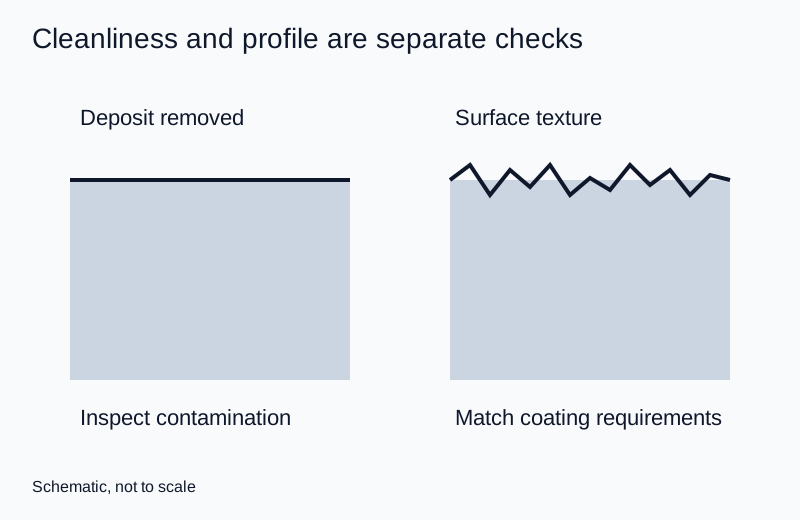
Do not assume a low-residue cleaning method will create a coating manufacturer’s required surface profile. If the specified system requires an additional preparation step, include it in the proposal. A surface can look improved yet still be unsuitable for the planned repair or coating.
Restoration with a defined assessment scope
In building restoration, the cleaning decision sits within a larger assessment. Water pathways, damage, assembly condition and occupancy constraints may determine whether cleaning is appropriate at all. A method should have a defined role in that scope, with clear limits on what it is expected to accomplish.
For example, a visible deposit on a fire-affected assembly does not establish the condition of the material behind it. The fire damage restoration framework explains why assessment and scope development precede final method selection. Cleaning records should preserve the distinction between removing a deposit and verifying the condition of the underlying assembly.
When should you consider another approach?
Water ice deserves particular scrutiny when the assembly cannot tolerate wetting, access prevents effective recovery, or the required finish has not been demonstrated. None of those problems becomes smaller because the media began as ordinary water.
Porous, fragile or historically significant surfaces also need specific assessment. Do not accept “non-abrasive” as a guarantee that there can be no loss of material, finish change or damage at joints. The relevant acceptance question is what happens to the particular surface under the proposed conditions, including repeated passes on difficult areas.
An unresolved hazardous-material question is another reason to pause method selection. Identifying a residue can change the containment, cleanup and disposal plan so substantially that an earlier price comparison becomes meaningless. Resolve the material question before asking contractors to compete on a production rate.
Plan exposure controls and waste recovery together
For U.S. construction work, OSHA’s construction ventilation standard, 29 CFR 1926.57, addresses abrasive-blasting hazards, including the contribution of media and surface coatings to respirable dust. This is a construction reference; the responsible safety professional must determine how the actual operation is classified and which requirements apply. Calling equipment “ice blasting” does not by itself establish an exemption or prove compliance.
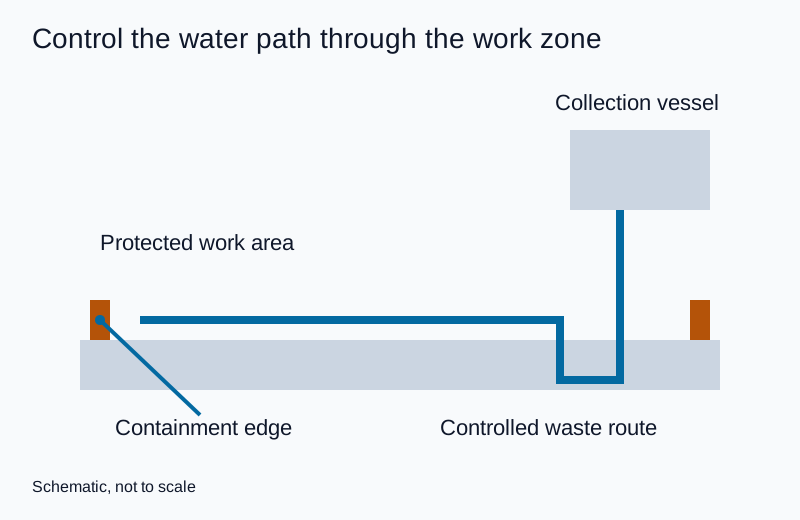
A useful contractor submission identifies what may leave the surface, who could encounter it, how the work zone is controlled, and how the team will confirm those controls work. It should also explain the handling of collected liquids and solids. Avoid a scope that carefully describes blasting equipment but leaves cleanup as an undefined allowance.
Where renovation may disturb lead paint in covered U.S. buildings, EPA’s RRP work-practice guidance describes containment, cleanup and verification requirements. That guidance is relevant to determining the obligations of a covered renovation; it is not approval to use water-ice blasting for lead removal. Confirm eligibility, restrictions and local requirements for the specific work.
Even if the medium contains no added cleaning chemical, the recovery stream can contain material from the building. The editorial planning rule is straightforward: characterize the waste before choosing its disposal route. Never base that decision solely on the cleanliness of the ice supply or on the absence of visible dust.
How to run a useful test area
The test should answer the same questions that determine acceptance of production work. Agree on its location and purpose with the person responsible for the specification. Include representative conditions, difficult details and nearby finishes that must remain undamaged. Where materials or deposits vary, more than one trial area may be necessary.
Before the trial
Write down the required result and the evidence that will demonstrate it. Record existing damage, coating condition, sensitive interfaces and adjacent operations. Identify the reviewer and agree what conditions would stop the trial. This prevents a disagreement later about whether a mark was pre-existing or caused by cleaning.
Confirm how removed material and meltwater will be managed during the test. A trial that ignores recovery may overstate productivity and understate the space or crew needed. Use the proposed production approach wherever practical so that the result can inform the real estimate.
During the trial
Record the equipment, media, operator settings, access arrangement and working sequence. Track the area treated and time spent on setup, active cleaning, recovery and interruptions separately. Record additional passes and any change of method on resistant areas. A single combined time can conceal whether cleaning or site logistics controls the output.
After the trial
Inspect the surface against the agreed criteria and review adjacent materials. Confirm whether remaining contamination, moisture, finish changes or inaccessible areas require additional work. Where the next coating or repair has a specified moisture or preparation requirement, use that requirement rather than assuming that a surface which feels dry is ready.
Approve the method only for the conditions demonstrated. If the trial fails, document why and decide whether to revise the scope, test another method, or adjust settings within the equipment instructions. The useful output is a repeatable work plan with an inspection record, not simply a photograph of a clean patch.
What determines the cost?
A meaningful estimate depends on the deposit, substrate, access, containment, utilities, waste handling and required finish. Quote comparisons should use the same boundaries for all of those items.
Ask for the following components to be identified as included work or explicit assumptions:
- Mobilization, equipment availability and operator time.
- Ice supply, storage and replenishment arrangements.
- Compressed air, power and other required utilities.
- Access equipment, masking, isolation and protection of adjacent finishes.
- Recovery equipment, waste characterization, transport and disposal.
- Drying, inspection, additional preparation and return visits.
When comparing two offers for the same wall, review what each includes. One includes only active cleaning time; the other includes masking, collection, drying checks and removal of collected waste. The lower cleaning price is not necessarily the lower completed-job price.
Use the trial record to ask which activity controlled the work rate, what assumptions changed, and which costs recur on each work zone. If downtime matters, request a schedule showing when the area can actually return to service. Completion of blasting and completion of the project are different milestones.
What should a contractor proposal include?
A usable proposal makes the intended outcome and its limits clear enough for another person to inspect. It should identify the equipment and medium, target surfaces, exclusions, test arrangements, recovery method and acceptance criteria. Attach photographs or location drawings when wording alone could leave ambiguity.
Ask who owns each handoff: authorizing the trial, accepting the surface, approving waste arrangements and releasing the area for the next trade. Also ask how changed conditions are recorded and priced. These responsibilities matter because the cleaning crew may not be the party deciding whether the substrate is suitable for coating.
Connect the cleaning records to the project’s site-management process. Keep the accepted test record, daily changes and final inspection together. Future maintenance teams need to know what was done and what remained outside the scope.
Frequently asked questions
Is wet ice blasting the same as pressure washing?
No. In the water-ice process described here, frozen particles are a working medium delivered with compressed air. Pressure washing relies on a water jet. Equipment can vary, so confirm the actual process before comparing proposals that use similar terminology.
Does it leave no waste?
No. Melting ice may eliminate a persistent solid blasting medium, but the removed deposit or coating still exists. Plan for the resulting liquids and solids, plus masking and other cleanup materials. “No spent grit” and “no waste” are different claims.
Can it replace abrasive blasting before painting?
Only if it achieves every surface condition required by the specified coating system. Cleaning alone does not demonstrate the necessary profile, contamination level or moisture condition. Additional preparation may be required; verify that before pricing the work.
Is it environmentally friendly?
A credible comparison needs a defined alternative and a complete project boundary. Consider media, utilities, containment, waste, transport, rework and return visits. Compare environmental impacts across that complete boundary.
Source scope and further reading
The patent explains an apparatus concept, the manufacturer announcement documents a commercial implementation, and the public-agency pages address the linked hazard or regulatory context. Evaluate the proposed method against the actual substrate and required surface condition.
For broader planning, return to the Surface Preparation topic hub or read our research methodology. Use the selection criteria, quote checklist and trial sequence alongside the project specification.
Explore the related topic and technical references.