Dry Ice Blasting: How It Works, Uses, Safety and Cost Drivers
A practical dry ice blasting guide covering the process, restoration uses, CO2 controls, residue recovery, trial acceptance and project cost drivers.
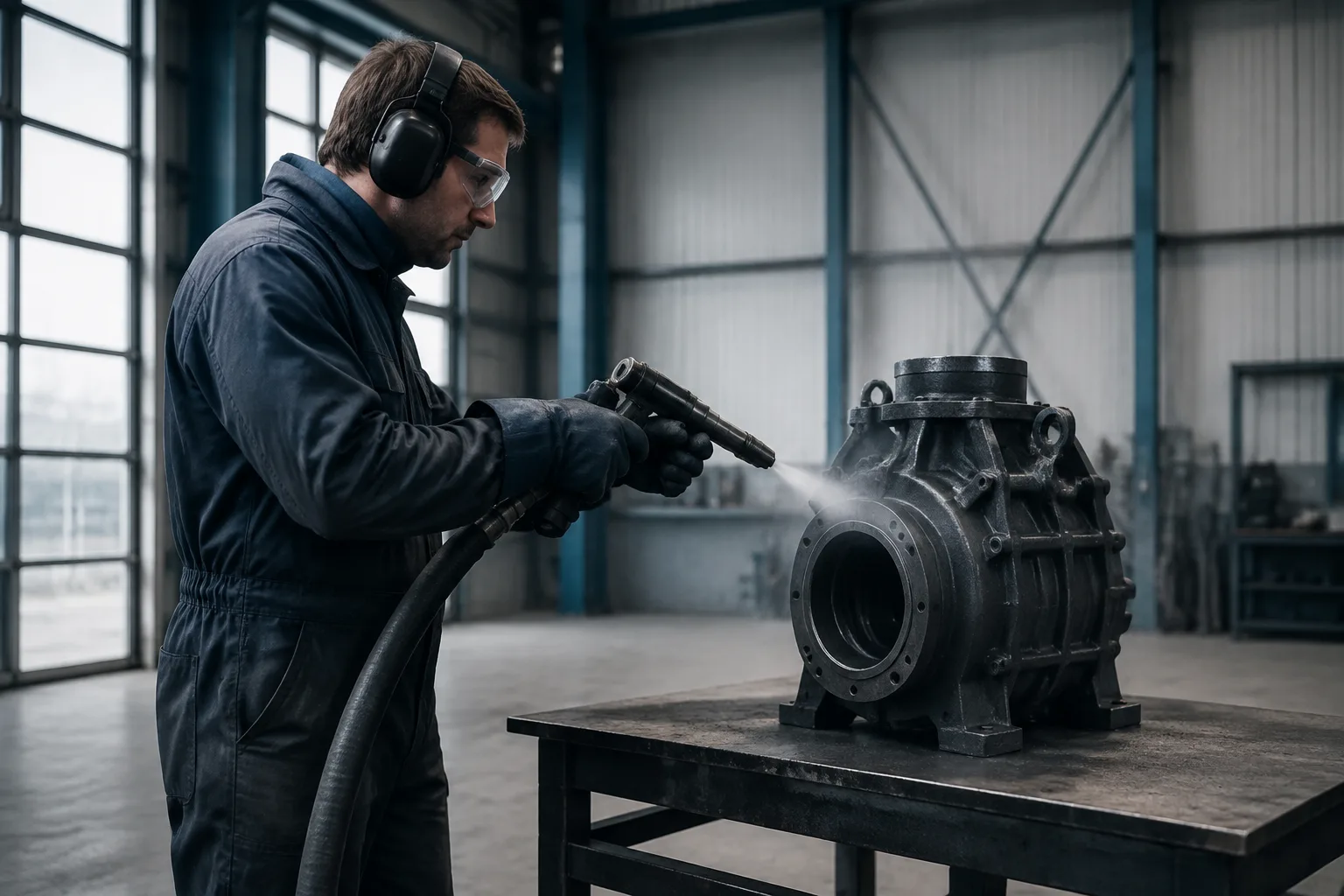
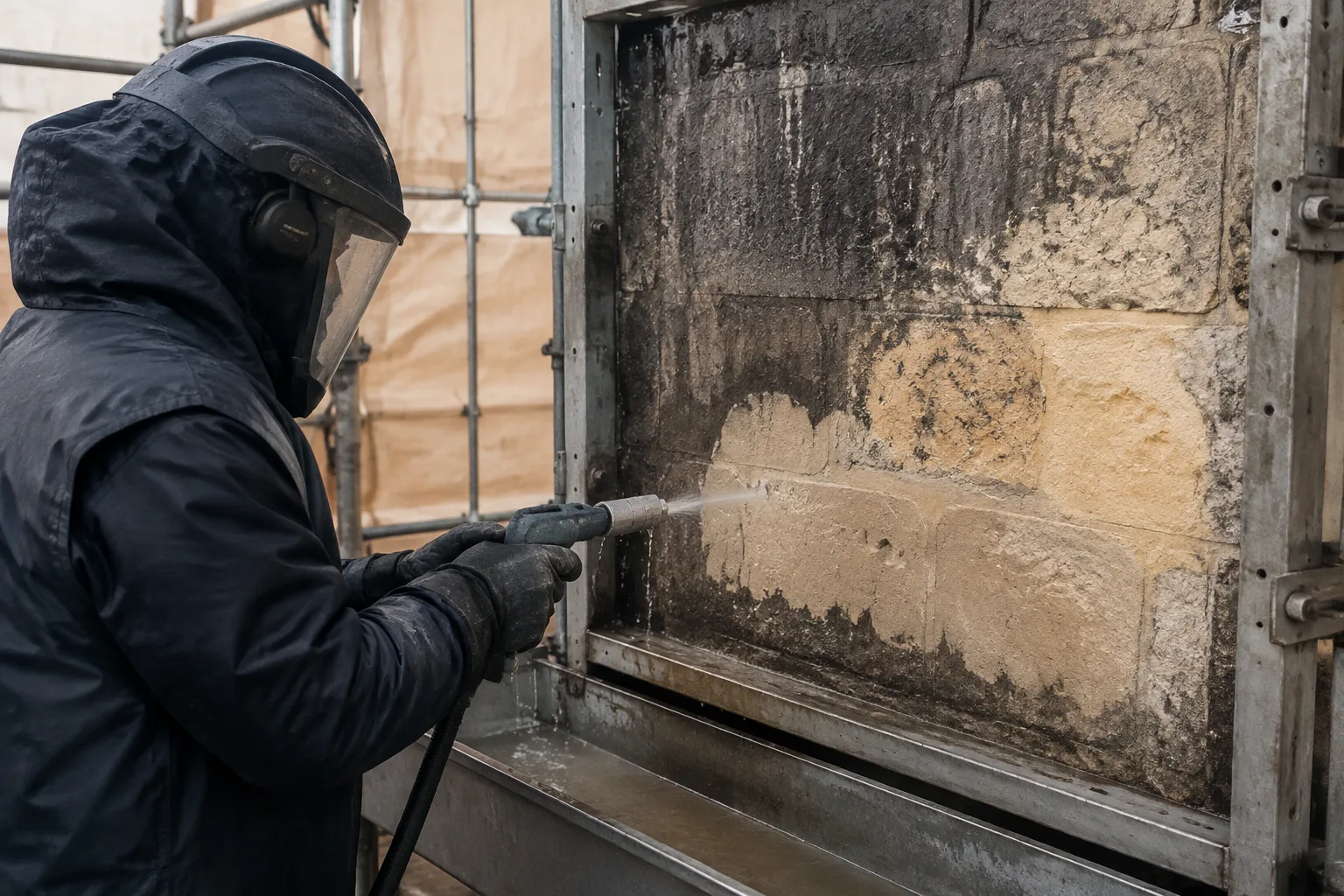
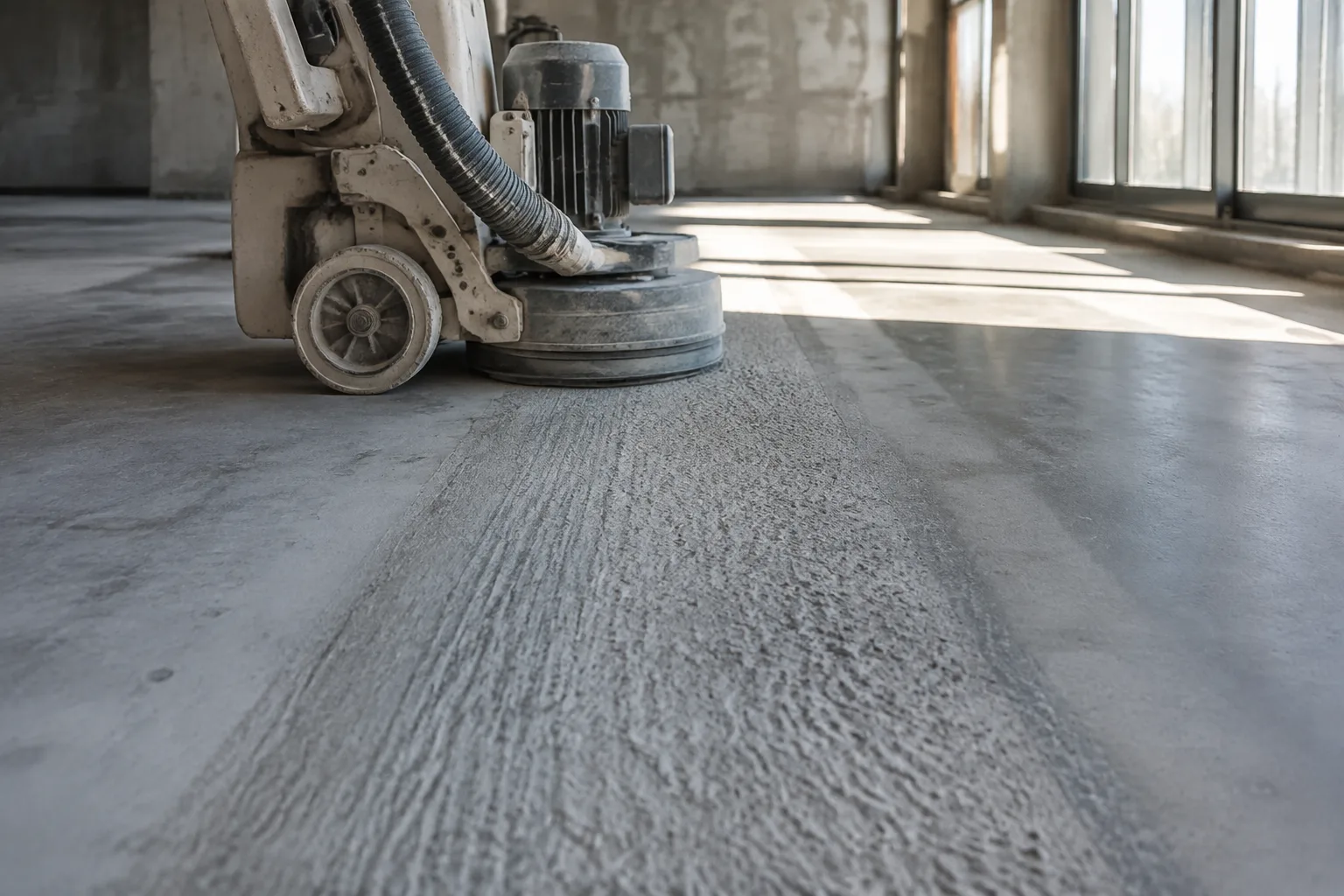
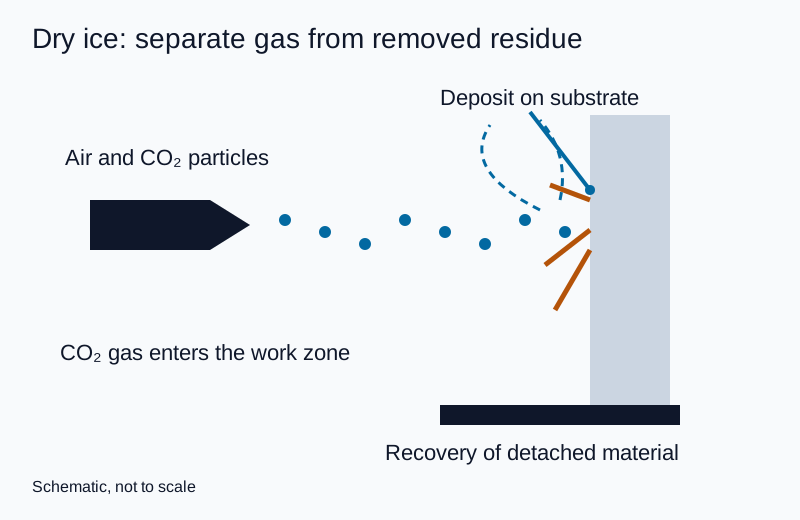
Dry ice blasting uses solid carbon-dioxide particles accelerated by compressed air to clean a surface. The medium changes from solid to gas through sublimation, so it does not leave spent grit or meltwater from the medium itself. The removed dirt, soot, coating or other deposit remains, however, and the gas released into the work environment requires its own controls.
For restoration and facilities work, dry ice blasting is worth evaluating when introducing water or persistent abrasive media would complicate the job. Its value depends on the required finish, access, air management and cleanup effort. This guide explains how to evaluate those conditions, compare contractor proposals and determine whether a trial has demonstrated a usable method.
How does dry ice blasting work?
Cold Jet’s equipment overview describes machines that use compressed air to accelerate carbon-dioxide pellets or smaller particles toward a substrate, where the medium sublimates and contaminants are lifted. Use the proposed equipment documentation and a trial on the actual surface to establish finish suitability and production conditions.
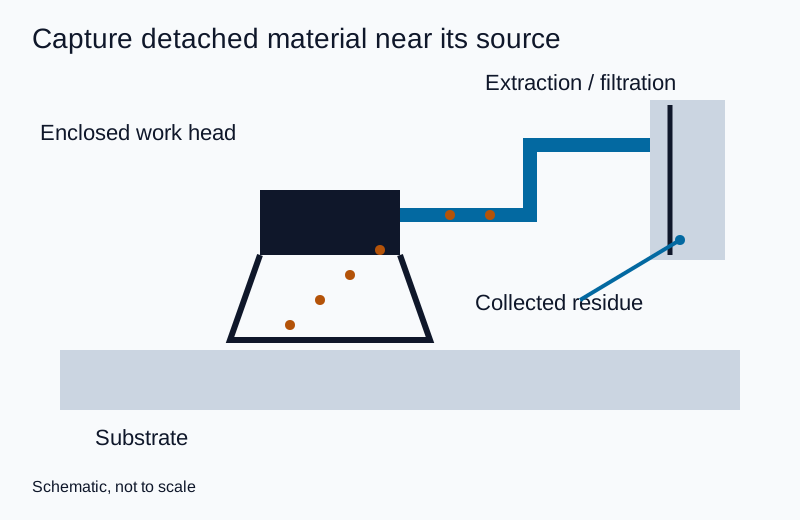
The practical sequence has three parts. First, a compatible machine receives the dry ice and the required air supply. Second, the nozzle directs particles at the target deposit. Third, the operator and recovery system manage what leaves the surface. The last part is easy to overlook in demonstrations that focus on the visibly cleaned patch.
A method statement should identify the specific machine, particle format, nozzle and air requirements. It should also identify who can change the setup and how approved trial settings will be recorded. A result achieved with one configuration is not proof that any machine described as a dry ice blaster will produce the same finish.
Do not copy a pressure, distance or production rate from an unrelated demonstration. Those choices belong to the equipment instructions and the trial on the actual material. Fragile finishes, thin components and detailed interfaces may impose constraints that are absent on a robust industrial test piece.
What remains after the dry ice disappears?
Separate the medium from the contamination. Carbon dioxide leaves the solid phase, but an oil film, a coating fragment or a soot deposit does not vanish merely because the cleaning medium sublimates. The work plan therefore needs both an air-management approach and a residue-recovery approach.
This distinction changes the comparison with other methods. Avoiding a second solid material may simplify one part of waste handling, yet containment, collection equipment, disposable protection and cleaning of adjacent surfaces can still be substantial. Ask a contractor what “no secondary waste” means in the quoted scope, rather than interpreting it as a promise that no waste will be produced.
When cleaning a component above an occupied floor, plan residue recovery and protection below. A successful cleaning pass can release the deposit onto equipment below unless it is protected or captured. The demonstration proves removal from the component; it does not prove that the overall work area is clean.
How does it compare with wet ice and abrasive blasting?
| Planning question | Dry ice blasting | Water-ice blasting | Conventional dry abrasive blasting |
|---|---|---|---|
| What is the medium? | Solid carbon dioxide | Frozen water | Selected abrasive material |
| What happens to it? | Sublimates to gas | Can melt to water | Remains as spent media |
| What must be recovered? | Removed residue and contaminated protection | Released residue and water | Residue and spent abrasive |
| What deserves specific attention? | CO2 exposure and air management | Moisture pathways and drying | Media selection, dust and recovery |
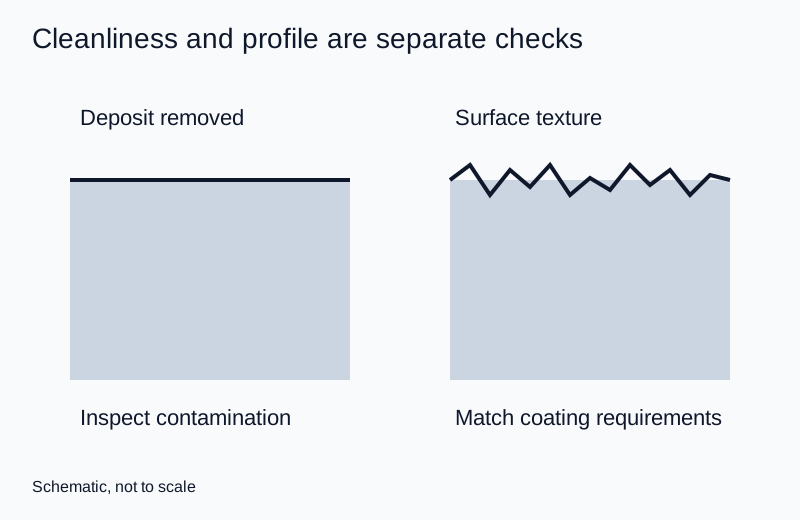
| What determines acceptance? | Required surface condition and damage limits | Required surface condition and damage limits | Required cleanliness, profile and damage limits |
The table compares material differences. A project requiring a specified coating profile may need a different process from one removing a maintenance deposit. A method that suits one objective may be an expensive preliminary step for the other.
Our wet ice blasting guide explains the water-ice alternative. Use the broader surface-preparation comparison to define the outcome before selecting equipment. Method selection should follow the specification rather than forcing the specification to fit a preferred machine.
Where can dry ice blasting be considered?
Treat the following as situations for evaluation. Suitability still needs a test on representative materials and a plan for the complete work zone.
Maintenance cleaning with difficult media recovery
Where spent grit would be difficult to recover from surrounding equipment or details, a sublimating medium may be worth testing. Compare the total access and protection requirements, however. A nozzle still needs usable access to the deposit, and the removed material still needs a destination.
Identify recesses, fasteners, openings and adjoining components during the survey. Request examples of how the contractor will address areas the main pass cannot reach. Otherwise an apparently complete price may omit hand cleaning or dismantling discovered only after the equipment arrives.
Fire and smoke restoration
Dry ice blasting may be proposed as one cleaning operation within a fire restoration scope. Define which surfaces are being cleaned and what the cleaning is meant to accomplish. Residue removal, odor investigation, structural assessment and replacement decisions are separate questions.
For smoke and soot cleaning, document the affected zones before work redistributes material. A visually improved surface is not, on its own, evidence that concealed assemblies are unaffected or that a building is ready for reoccupation. Specify the acceptance responsibility and any further assessment independently of the machine choice.
Wood and other sensitive surfaces
A proposal involving wood, historic finishes or delicate components should identify unacceptable surface changes before testing. Texture, edge loss, finish removal and retained contamination can matter as much as speed. “Non-abrasive” is an equipment description, not project-specific proof that every surface will remain unchanged.
If the work concerns mold on wood, moisture control and the wider remediation assessment remain necessary. Do not treat cleaning equipment as a cure for an unresolved water source. The decision to clean, remove or replace a component should come from the assessment and intended use of the assembly.
Carbon dioxide requires a specific exposure plan
The NIOSH Pocket Guide entry for carbon dioxide identifies the gas as colorless and odorless. It lists a recommended time-weighted exposure limit of 5,000 ppm, a short-term recommendation of 30,000 ppm, and an immediately dangerous to life or health value of 40,000 ppm. These are different reference values, not interchangeable operating targets or suggested alarm settings.
Have a qualified occupational-safety professional select the applicable exposure criteria, instruments, ventilation and response arrangements. Base enclosure ventilation and staffing on the assessed gas release, air movement and exposure conditions.
Carbon dioxide and oxygen are different measurement targets. Do not assume an oxygen-only instrument provides a carbon-dioxide concentration reading. OSHA’s technical manual on monitoring instruments discusses instruments and sensors for particular gases, including carbon dioxide. Confirm that the selected instrument actually measures the hazards identified in the assessment and is maintained and used appropriately.
The same planning applies to adjacent spaces, ice storage and breaks in work. A plan that considers only the operator’s position during active blasting may miss other exposure locations. Define the boundaries of the assessment, who reads the instruments, and what action follows a loss of ventilation or an alarm. Do not use visible fog or the absence of an odor as clearance evidence.
Containment, worker protection and equipment isolation
Air management does not replace control of removed contamination. Identify the coating or deposit before disturbing it, especially where its composition is uncertain. The waste and exposure questions can change the feasible methods, necessary controls and price of the work.
OSHA’s abrasive-blasting hazard guidance explains that hazards can arise from blasting materials and the surfaces being treated. Use it as context for a competent assessment of the actual operation; it is not a declaration that every dry ice setup falls into an identical regulatory category.
Ask the contractor to address rebound, noise, handling of cold material, hoses, restricted access and interaction with other trades. Document the protective arrangements selected for the actual hazards. A dust-filtering facepiece does not by itself solve a carbon-dioxide gas exposure problem; respiratory protection must be selected as part of the relevant professional assessment.
Equipment isolation also deserves its own decision. A supplier’s description of a non-conductive medium is not permission to work on energized machinery. Confirm the facility’s isolation procedure and the equipment manufacturer’s requirements before the scope is accepted. Avoid placing responsibility for that decision in a vague note stating that the area will be “ready for cleaning.”
Build the trial around acceptance criteria
A trial should prove more than deposit removal. It should demonstrate the whole sequence under representative access, containment and air-management conditions. Include difficult areas as well as convenient flat surfaces, and identify a reviewer before the test begins.
Record existing damage and define the finish that must remain. Agree on any unacceptable texture change, coating loss or effect on adjacent components. Where inspection requires more than visual review, identify the method and the responsible party. The coating, repair or maintenance specification should govern that choice.
During the trial, log the setup and the time used for each part of the work. Record active cleaning, recovery, access changes and interruptions separately. If the operator changes configuration, note where and why. These observations help distinguish equipment performance from the time consumed by the site.
Afterward, inspect both the target surface and the surrounding work zone. Confirm whether the next operation can proceed or whether additional cleaning, preparation or assessment remains. Approve the method for the conditions actually demonstrated. If deposits or substrates change elsewhere, revisit the trial rather than assuming the first result applies everywhere.
How should you compare project costs?
Separate an equipment purchase price from the cost of a completed cleaning scope. Owning a machine does not supply the crew, compressed air, media, protection, recovery, inspections or access arrangements. A rental rate is equally incomplete without those items.
Ask bidders to state their measured or assumed output for your conditions and identify the items included in that calculation. A comparison is useful only when the required finish and scope boundaries match.
| Cost component | Question to ask |
|---|---|
| Dry ice supply | Who arranges delivery, storage and replenishment? |
| Air and utilities | What equipment is included, and what must the site supply? |
| Access and protection | Are lifts, isolation, masking and adjacent-area cleaning included? |
| Exposure controls | Who provides the assessed ventilation and monitoring arrangements? |
| Recovery and disposal | What residue handling and removal are included? |
| Acceptance | Are inspections, further preparation and return visits included? |
Dry ice sublimates during storage as well as use, so delivery timing and storage arrangements should be discussed with the supplier. Avoid estimating media requirements from the active nozzle time alone. Delays, changed access and interrupted work can affect the supply plan even before the cleaning objective changes.
Compare protection, cleaning, recovery and acceptance as one completed scope. A low nozzle-hour rate can exclude work that another bidder includes; align these boundaries and the outage duration before comparing totals.
What belongs in the final work record?
Keep the accepted trial, equipment configuration, daily changes and completion inspection together. Identify the surfaces treated and any exclusions, including inaccessible areas and retained coatings. Future maintenance staff should be able to distinguish completed cleaning from deferred investigation.
Connect the records to the project’s site-management workflow. Assign responsibility for releasing the work area and for communicating outstanding conditions to the next trade. Where the result is intended to support a coating or repair, retain the acceptance evidence required by that system.
A useful closing record answers three questions: what was removed, what condition remains, and what still needs to happen. It should not rely solely on before-and-after photographs or a supplier’s general statement that the process leaves no residue.
Frequently asked questions
Is dry ice blasting dust-free?
No. The medium sublimates, but material detached from the surface can still need airborne control or collection. Whether visible dust is present does not determine whether the work zone is safe or whether cleanup is complete.
Can it be used inside a building?
Only after the actual work area and controls have been assessed. Interior volume, ventilation, adjacent spaces, occupancy and the material being removed all matter. Do not infer suitability from the presence of an open door or from a successful trial in a different building.
Does dry ice blasting remove every coating?
No universal claim is justified. A proposal must distinguish cleaning a coating from removing it, and both from creating a specified substrate profile. Test the real coating and underlying material against the required outcome.
Does using dry ice guarantee a dry, ready-to-coat surface?
No. The medium does not supply meltwater, but existing moisture, environmental conditions and contamination still affect the substrate. The next system’s preparation and application requirements determine readiness, not the name of the preceding cleaning method.
Related reading
Match U.S. occupational references to the actual jurisdiction and operation. Evaluate equipment performance against the required surface condition.
Return to the Surface Preparation hub for related methods. Our source methodology explains the scope of technical references and product data.
Explore the related topic and technical references.