Mold on Wood: Moisture, Cleaning, Replacement and Verification
Understand mold on wood, how it differs from decay and staining, when to seek professional help, and what to verify before retaining or covering timber.
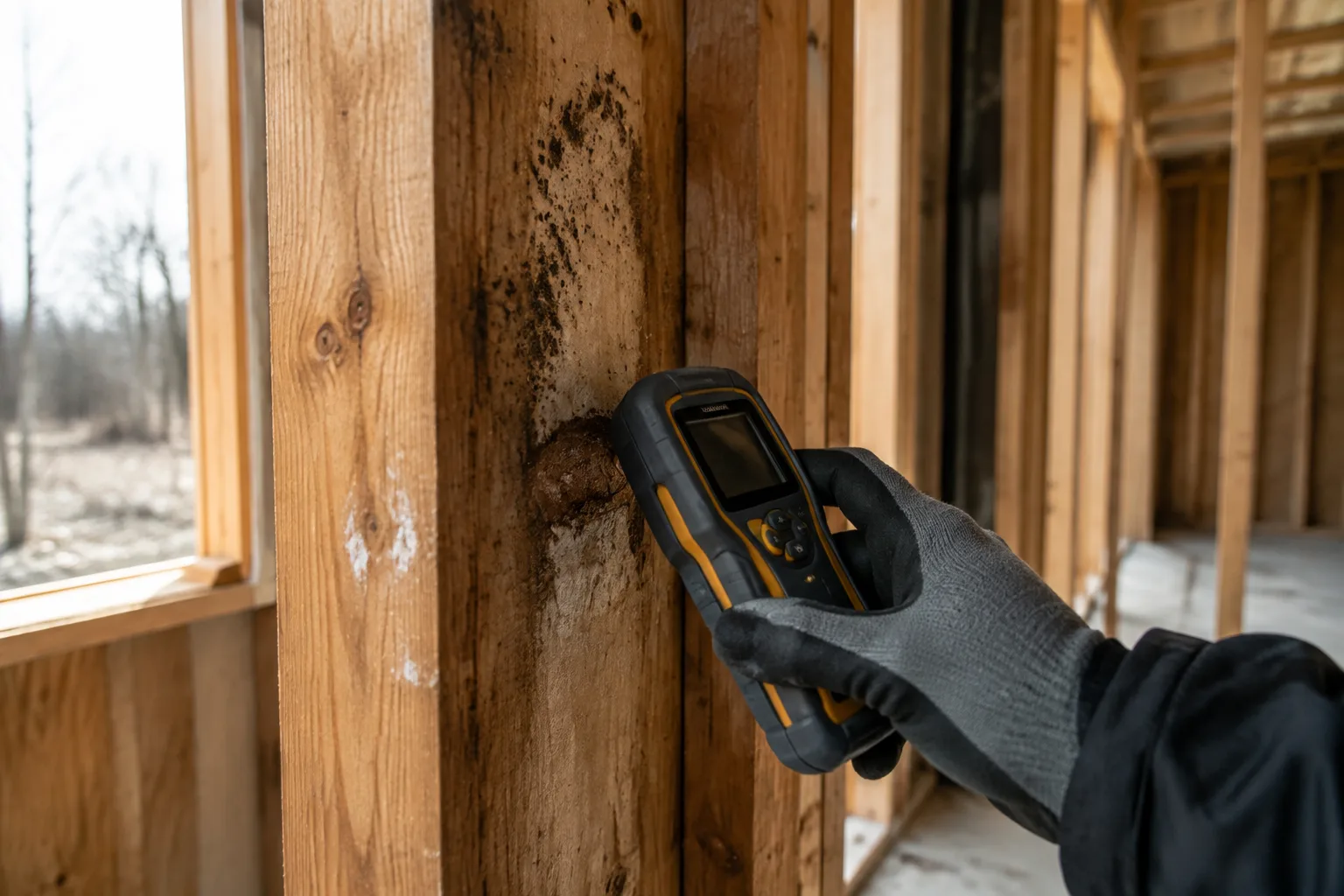
Mold on wood is a reason to investigate moisture, the extent of the affected area and the condition of the material. It is not automatically proof that every timber must be replaced. Nor does wiping away a dark patch establish that the moisture problem or the building’s repair needs have been resolved.
The practical question is whether the wood can be appropriately cleaned and dried while retaining its intended function. This guide helps owners and project teams organize that decision. Health concerns need clinical advice; structural and remediation decisions need qualified project assessment.
Quick answer: what should you do about mold on wood?
Identify and correct the moisture problem, assess the affected materials and choose a cleanup approach appropriate to the exposure and building conditions. Keep cleaning, drying and structural decisions separate. Before enclosing or refinishing wood, document why it is suitable for the proposed next use.
Seek professional help when the extent is uncertain, access is hazardous, contaminated water is involved, the material may be deteriorated or occupants have particular health concerns. Do not disturb suspect growth merely to obtain a better photograph. If you have health symptoms or concerns, discuss them with a qualified healthcare professional.
Mold, decay and staining are different questions
Wood can show discoloration for several reasons. A photograph of a dark area cannot establish the organism involved, whether growth is active or whether the member retains adequate strength.
The EPA cleanup guide notes that mold can leave staining and cosmetic damage after cleaning. Assess the timber’s physical condition and intended structural role separately before deciding whether it can remain; a color change alone does not answer those questions.
For a project record, separate three observations:
- Surface condition: visible growth, deposits or discoloration requiring assessment.
- Moisture condition: known wetting, suspected pathways and relevant measurements.
- Material integrity: any concern about damage, distortion, connections or performance.
A cleaned surface does not settle the third question. If a load-bearing component appears damaged or its condition is uncertain, have an appropriately qualified building professional determine the investigation and repair requirements.
Does black color identify a dangerous species?
No. Color alone is not a reliable identification or a measure of exposure. The CDC overview of mold describes potential health effects and notes that susceptibility varies. Avoid both dismissing visible growth as harmless and declaring a diagnosis from its color.
The useful next step is to address the moisture and affected material, with professional advice where appropriate. A dramatic species label should not replace a clear explanation of what the contractor will inspect, remove, clean and verify.
Find the moisture pathway before finalizing treatment
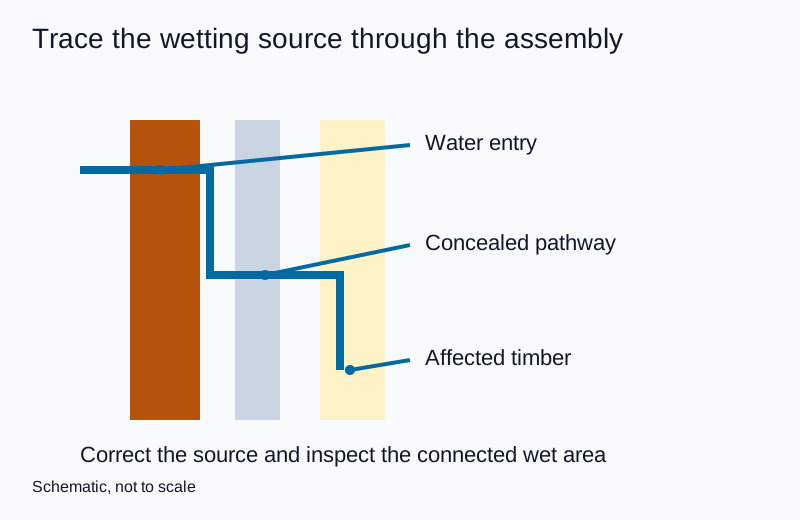
Begin with the building history: recent leaks, flooding, construction wetting, firefighting water or recurring condensation complaints. Ask the assessment team to identify the evidence for the proposed source rather than selecting a repair solely from where the stain is visible.
A useful moisture record contains the location, observation date, material, instrument or assessment method where used, and the proposed corrective action. If the cause remains uncertain, leave it explicitly unresolved. “Dehumidifier installed” describes an action; it does not identify the original water pathway.
The source investigation and urgent mitigation may need to proceed together under professional direction. The important handoff is that unresolved water entry or accumulation must not disappear from the scope when cleaning begins.
Avoid a universal wood-moisture pass number
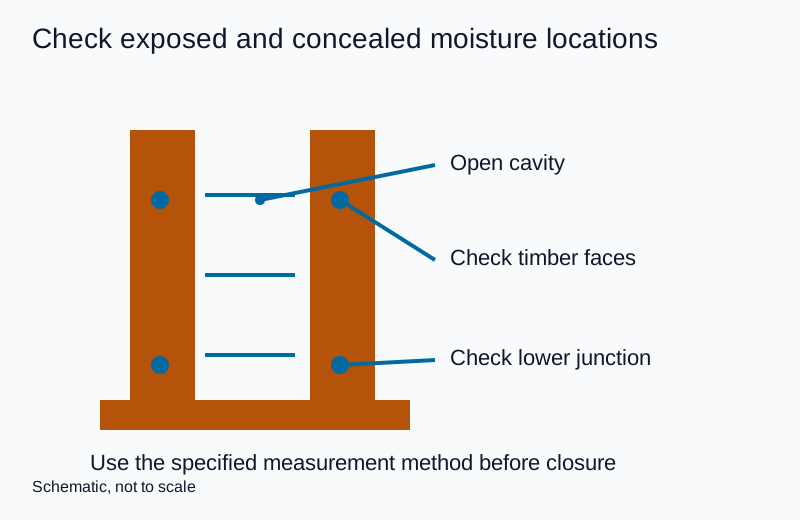
A moisture reading needs context: the instrument, material, measurement location and intended next operation. Ask the responsible person to state the criterion and its basis. Do not copy a number from an unrelated floor installation or timber-storage example and use it as a universal mold-clearance threshold.
For a finish or assembly being installed afterward, obtain the applicable product and project requirements. Keep the reading locations traceable so a later reviewer can distinguish actual verification from a statement that the room “felt dry.”
When does a small patch need professional help?
The EPA home-cleanup guidance says occupants can handle many areas smaller than about 10 square feet, but it also flags substantial water damage, suspected HVAC contamination, contaminated water and health concerns as reasons for additional advice. The area is a screening consideration, not permission to ignore other hazards.
Before treating a small visible patch as the whole problem, ask whether adjoining material or concealed spaces may be affected. A cabinet back or exposed timber face might be only the accessible part of an assembly.
Professional input is particularly useful when the proposed work involves opening cavities, altering structural wood, preserving valuable furniture or working in an occupied sensitive setting. Ask about experience with the actual material and situation, not merely general cleaning experience.
Not all wood products should receive the same treatment
A solid timber, a coated cabinet and a layered panel are different items. Record what is present before accepting a whole-room treatment proposal.
| Material or use | Question to resolve | Evidence to request |
|---|---|---|
| Structural framing | Can it retain its intended function after remediation? | Condition assessment and any required repair decision |
| Finished furniture | Can treatment preserve the coating, joints and appearance? | Specialist advice or a representative treatment trial |
| Plywood or other layered panels | Is the panel condition compatible with retention? | Assessment of the actual product and observed damage |
| Flooring and trim | What are the requirements for reuse and refinishing? | Moisture and finish requirements, with proposed checks |
| Historic or decorative wood | Would treatment remove significant original material? | Conservator-led limits and documentation |
| Concealed wood in an assembly | Can the relevant areas be inspected and verified? | Defined access, exclusions and closure approval |
A replacement decision should identify the reason: condition, access, treatment feasibility or another documented requirement.
How should a cleaning proposal be evaluated?
Ask the contractor to describe the intended result before naming the machine or chemical. The scope should identify affected areas, protection of adjacent spaces, removal or retention decisions, recovery of residues and the proposed completion checks.
The EPA remediation guidelines for schools and commercial buildings include wood surfaces and organize approaches by affected area and material. They explicitly state that the size categories support planning rather than represent health-effect thresholds, and that professional judgment remains necessary. Do not lift a single cell from the table and treat it as a complete procedure.
If mechanical treatment is proposed, ask what material loss or finish change is acceptable and how exposure and recovery will be controlled. Our surface preparation methods guide helps frame those questions. Neither sanding nor blasting should be an automatic response to an unidentified dark mark.
A chemical application is not a complete endpoint
The EPA guidance on bleach and mold does not recommend biocides as a routine cleanup practice. It also explains that dead mold can still cause allergic reactions, so killing it alone is insufficient. Never mix bleach with ammonia-containing cleaners.
If a professional proposes a chemical, ask why it is needed, whether it is suitable for the actual wood and finish, and how its use relates to physical cleanup and moisture correction. Follow the applicable label and safety requirements; do not substitute an improvised mixture or a general internet dilution recipe.
Test preservation-sensitive surfaces
Where retention of a finish matters, agree on a small representative trial under appropriate controls. Record the initial appearance, proposed method, complete treatment and result. Assess unacceptable changes such as altered texture or damage to the retained coating separately from the removal objective.
The trial is not a health-clearance test. Its role is to inform treatment feasibility and preservation decisions. If the material changes across the work area, a successful test on one surface does not automatically authorize the same treatment everywhere.
Use separate inspection gates before closure
Before installing finishes or closing an assembly, bring the different decisions together. A useful release record answers four questions:
- Has the moisture problem been addressed? State the corrective work, what supports its effectiveness and any follow-up still needed.
- Has the agreed cleanup been completed? Identify the inspected area, relevant findings and remaining exclusions.
- Does the material meet the specified drying requirements? Record the method, locations and basis for acceptance.
- Is the wood suitable for its intended function? Include any required specialist findings, repair details and approvals.
Coordinate these gates with the applicable remediation requirements. The project team should define the acceptance criteria and the authority responsible for each decision.
Do not merge these into a single statement such as “treated and ready.” That phrase makes it difficult for the next trade to know whether the moisture source, surface condition and material integrity were actually considered.
Is mold testing always necessary?
No. The EPA guidance on mold testing and sampling says sampling is usually unnecessary when visible growth is present. It also notes that there are no federal mold or mold-spore limits against which a building can be tested for compliance. Sampling, when appropriate, needs qualified design and interpretation.
If a contractor recommends testing, ask which unresolved question it addresses and what action would follow each possible result. A test package without an interpretation plan can add a number to the file without improving the decision.
Testing also has a defined scope. Results from selected locations do not automatically describe every cavity, material or later condition. Keep the sampling findings attached to their stated purpose rather than presenting them as proof of universal absence.
What if a stain remains after cleaning?
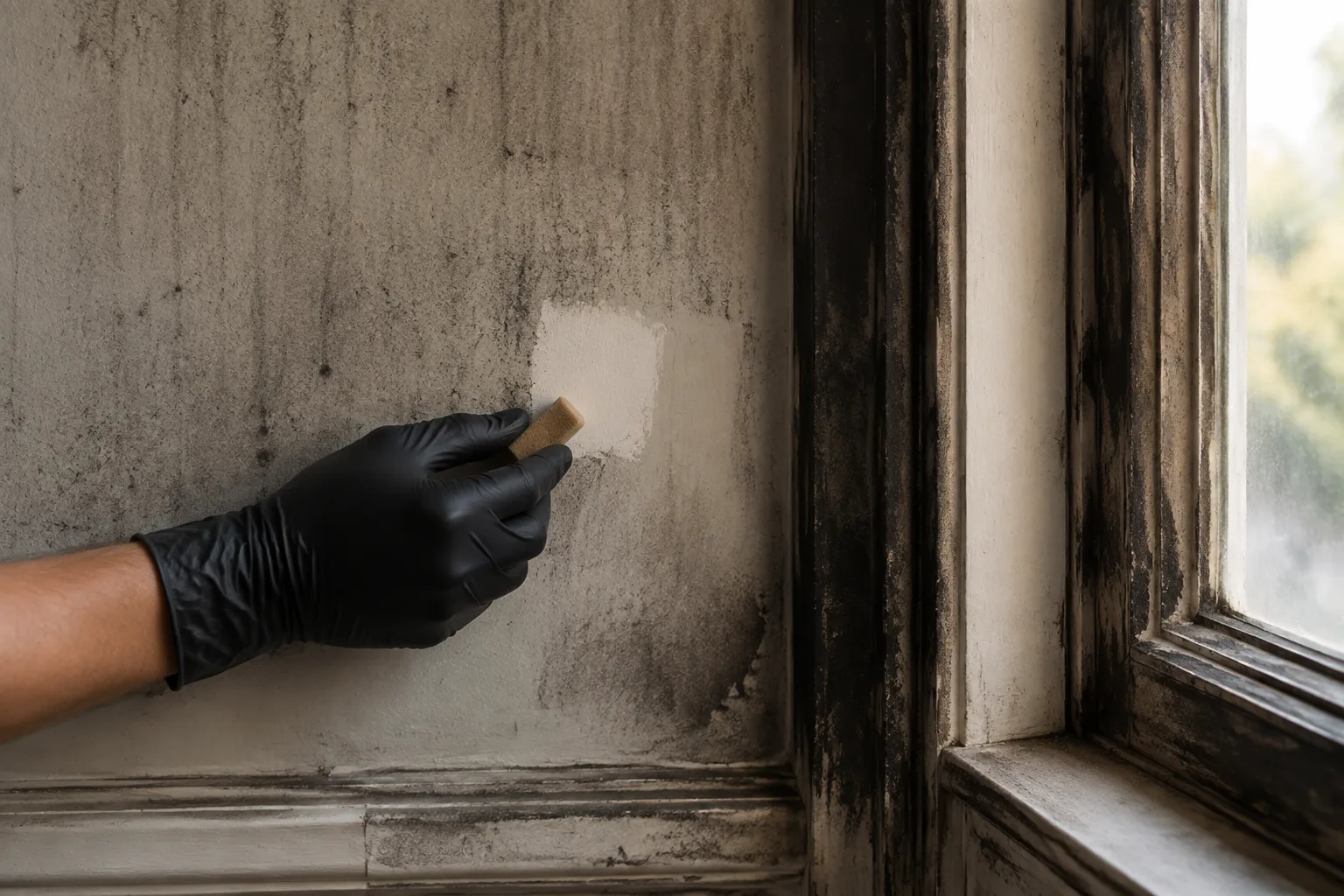
A remaining mark should be assessed against the agreed cleanup and appearance criteria. It does not, by itself, prove that treatment failed or succeeded. Avoid repeated aggressive treatment solely to make every piece of wood look newly manufactured.
If cosmetic restoration is proposed after remediation, keep it as a separate scope with a suitable substrate and compatible finish. New paint or a sealer should not conceal an unresolved moisture or cleanup issue. Ask for release documentation before those coatings are installed.
Likewise, a lighter color after chemical treatment is not enough to establish successful remediation. The acceptance record needs to address the work that mattered, not only the most visible before-and-after change.
Prevent recurrence with a specific follow-up plan
Assign responsibility for checking the repaired water pathway and reporting changes. A follow-up plan should name the area, trigger and contact rather than simply say “monitor.”
Arrange follow-up checks around the conditions that caused the wetting, such as wind-driven rain at a repaired opening. The responsible professional should define the observation period and verification needed for the actual repair.
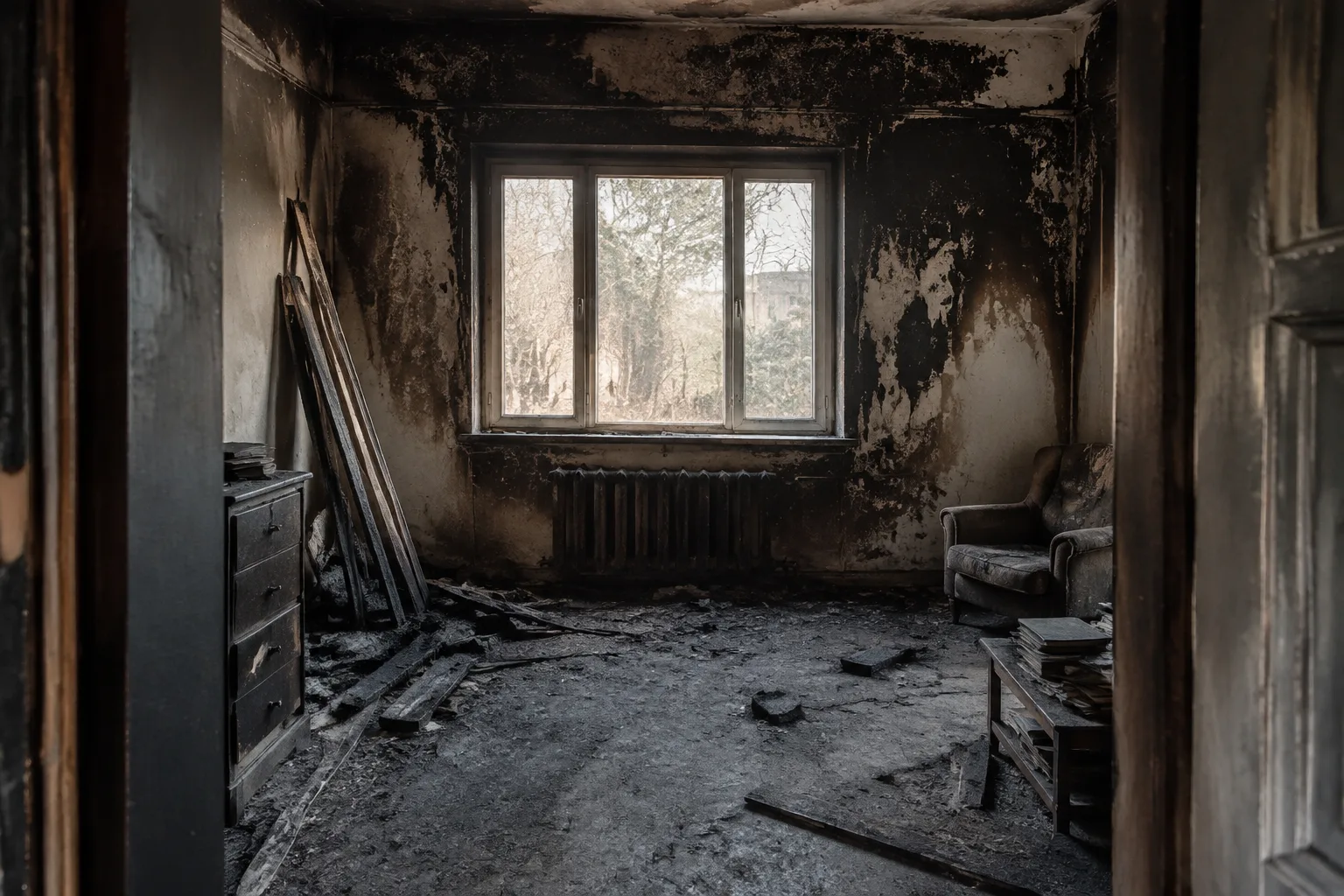
Where multiple trades are involved, place these responsibilities in the site-management plan. If the wetting followed a fire, coordinate them with the fire-restoration scope. The building-restoration hub connects related assessment and repair topics.
Questions to ask before accepting a quote
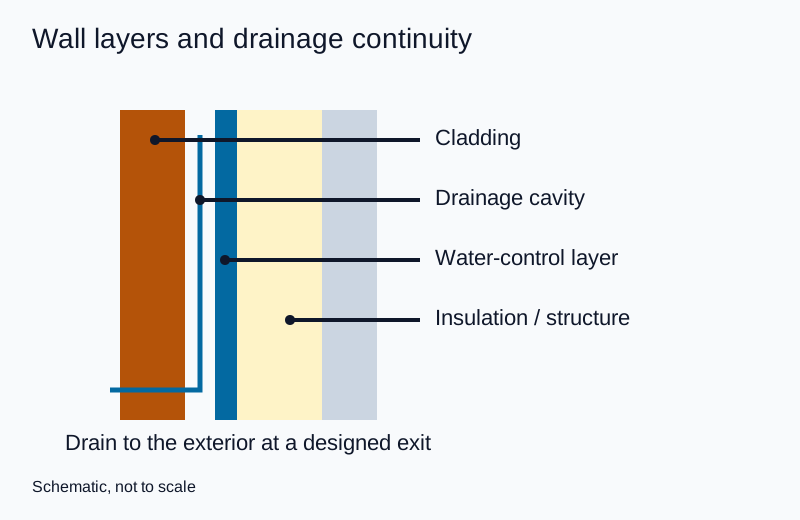
Ask each contractor to identify the same boundaries: affected wood, adjacent materials, inaccessible areas, protection, waste handling, moisture correction, verification and reconstruction. Establish whether specialist assessment and finish restoration are included or separate.
Request a written change process for hidden damage or a larger affected area. A useful estimate makes uncertainty visible through stated assumptions rather than a promise that one treatment covers every discovery.
Do not compare only the price per visible square foot. Access, material sensitivity, occupied conditions and closure requirements can change the work considerably.
Frequently asked questions
Must moldy framing always be removed?
Not automatically. Retention depends on the material’s condition, whether appropriate cleaning and drying are feasible, and the relevant professional assessment. Surface cleaning alone cannot approve a structural member.
Can dry wood still need cleanup?
Dryness and cleanup answer different questions. Removing the moisture condition that supports growth does not establish that the agreed surface remediation has been completed.
Can I identify mold from a photograph?
A photograph can document visible conditions but cannot reliably establish species, exposure or structural suitability. Use it to communicate the location and appearance, not as a standalone diagnosis.
Can a contractor guarantee that mold will never return?
A broad promise cannot substitute for moisture control and defined maintenance responsibilities. Ask for the actual warranty terms, exclusions and response process, while keeping technical acceptance separate from marketing claims.
Explore the related topic and technical references.